• The OxyContin Story

    Purdue Pharma, The Sackler Family, and the Opioid Crisis

    How a pharmaceutical empire was built — and what it cost millions of Americans

    A Note to Our Readers: This article is written with deep respect for the millions of people living with chronic pain and for those whose lives have been touched by addiction. Pain is real. Suffering is real. The story told here is not a condemnation of patients — it is an examination of corporate and regulatory failures that harmed both those who needed relief and those who were led into dependency. If you or someone you love is navigating pain management or recovery, please know you are seen, and your experience matters.

    Introduction: A Crisis That Didn’t Have to Happen

    Few chapters in American medical history are as tragic  or as preventable  as the opioid epidemic. At its center is a single drug: OxyContin. Around that drug, a story of extraordinary ambition, willful blindness, corporate deception, regulatory failure, and, ultimately, devastating human cost.
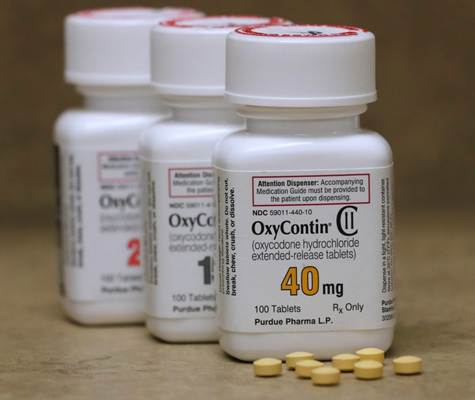
    Oxycontin

    For the people most deeply affected, chronic pain patients who relied on opioids to live functional lives, individuals who became dependent or addicted through no fault of their own, and the families torn apart by overdose, the OxyContin saga is not an abstraction. It is personal. It is lived. And for many, it continues today in the form of restricted access to medications that genuinely help, stigmatized clinical relationships, and a pain management landscape that remains fractured by the consequences of Purdue Pharma’s choices.

    This is the story of how OxyContin was developed, how it was marketed through one of the most aggressive and deceptive pharmaceutical campaigns in history, how addiction and overdose deaths followed, and how the Sackler family, the billionaires who owned Purdue Pharma , used the legal system to shield their fortune while the communities they helped devastate were left to rebuild on their own.

    Part One: The Origins of OxyContin

    Purdue Pharma and the Sackler Dynasty
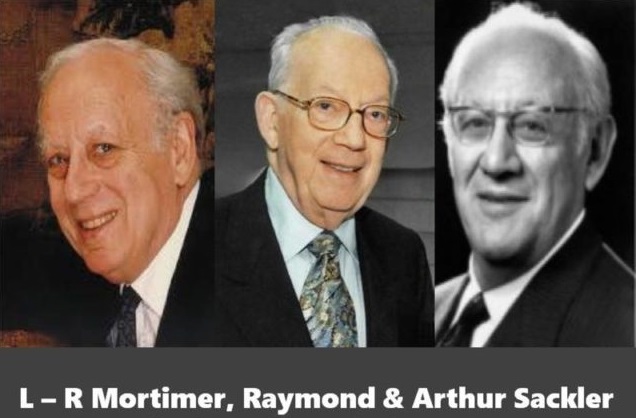
    The Sackler Brothers

    Purdue Pharma was founded in 1892 as a small New York medical publisher, but its transformation into a pharmaceutical powerhouse began when the Sackler family entered the picture. Arthur, Mortimer, and Raymond Sackler were three brothers who became wealthy through advertising, psychiatry, and pharmaceutical marketing in the mid-20th century. Arthur Sackler, in particular, was a pioneering force in direct-to-physician drug marketing, a model that would later prove catastrophic in Purdue’s hands.

    After Arthur Sackler’s death in 1987, his portion of the company was sold to his brothers, leaving Mortimer and Raymond — and eventually their descendants — in full control of Purdue Pharma. The family operated the company privately, shielding its finances from public scrutiny for decades.

    MS Contin and the Road to OxyContin


    Before OxyContin, Purdue had found success with MS Contin, a controlled-release morphine tablet for cancer pain. MS Contin was genuinely useful for patients in severe, end-of-life pain, and it gave Purdue Pharma both a revenue stream and a template — the idea that extended-release opioids were a viable and even superior product to short-acting formulations.
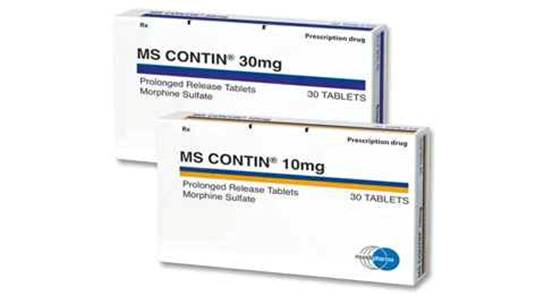
    MS-Contin was a Purdue product that sold well, which led for them to search for the next contender.  They found Oxyconting which would be their blockbuster drug

    When the MS Contin patent was approaching expiration in the mid-1990s, Purdue needed a new product. The result was OxyContin: oxycodone in a patented extended-release formulation, marketed as providing 12 hours of continuous pain relief from a single tablet. The drug was approved by the FDA in December 1995 and launched in 1996.

    The Science Behind the Drug


    Oxycodone itself was not new. It had been used in combination products like Percocet for decades. What Purdue claimed was new was the delivery mechanism: a wax matrix coating that, in theory, released the drug slowly over 12 hours. The FDA, in approving OxyContin, accepted Purdue’s claim that the extended-release formulation made the drug less prone to abuse than immediate-release opioids,  an assertion that would later be exposed as unfounded and, arguably, deliberately misleading.

    Critically, many patients found that the drug’s effects wore off well before 12 hours, leading physicians to prescribe more frequent dosing and inadvertently increasing exposure. And for those who learned to crush the tablet, the extended-release coating became irrelevant, releasing a powerful dose of oxycodone all at once.

    Part Two: The Marketing Campaign — A Masterwork of Deception


    The ‘1% Addiction’ Myth

    Perhaps no single piece of misinformation did more damage than the claim Purdue’s sales force repeatedly made to physicians: that fewer than 1% of patients prescribed OxyContin for pain would develop addiction. This figure originated from a brief letter published in the New England Journal of Medicine in 1980, which reported that addiction was rare among hospitalized patients given narcotic medications. It was not a clinical study. It did not examine long-term outpatient use. It did not define addiction rigorously. Yet Purdue’s representatives cited it thousands of times as scientific proof that OxyContin was “not addictive” when used for pain.

    “We have to hammer on the abusers in every way possible. They are the culprits and the problem. They exist in every community and must be identified to your doctors so they can be treated for their obvious problem.” — Internal Purdue Pharma communication to sales staff, circa 2001

    This narrative was central to Purdue’s commercial strategy. By reassuring physicians that addiction risk was negligible, the company could encourage broader prescribing not just for cancer pain, the traditional domain of strong opioids, but for common chronic conditions like back pain, arthritis, and fibromyalgia. The market expansion was deliberate and dramatic.

    Targeting Physicians and Building a Sales Force

    Purdue deployed one of the largest and most aggressive pharmaceutical sales forces the industry had seen for a single drug. By the late 1990s, hundreds of sales representatives were visiting physician offices across the country, with particular focus on high-prescribing pain specialists, general practitioners in rural and post-industrial communities, and physicians who were unfamiliar with the risks of opioid therapy.

    Sales representatives were incentivized through a bonus structure tied directly to the number of OxyContin prescriptions written in their territories. The more prescriptions, the larger the bonus. Some representatives earned tens of thousands of dollars annually in bonuses alone. Internal documents later revealed that Purdue was fully aware which physicians were prescribing at unusually high volumes, so-called “pill mills”, and in many cases, continued to send representatives to those offices rather than reporting concerns.

    Gifts, Meals, and Sponsored Education


    The campaign extended far beyond sales calls. Purdue sponsored thousands of pain management seminars at resorts and vacation destinations, flew physicians to training conferences, and distributed branded merchandise. Doctors received gifts, meals, and speaking fees. The company created patient education materials emphasizing the benefits of treating pain aggressively and distributed literature that reinforced the message that undertreated pain was a crisis, and opioids were the solution.

    Purdue also cultivated relationships with pain advocacy organizations, some of which received funding from the company, and whose public messaging often aligned closely with Purdue’s commercial interests. The medical and regulatory establishment was, in many ways, swimming in the same waters, creating an environment in which critical scrutiny of OxyContin’s risks was slower to emerge than it should have been.

    The ‘Pseudoaddiction’ Concept

    When patients began showing signs of physical dependence and asking for higher doses, becoming distressed when prescriptions were delayed, or visiting multiple physicians, some Purdue-affiliated clinicians promoted a concept called “pseudoaddiction.” The idea was that these behaviors were not signs of addiction, but signs of undertreated pain. The solution, in this framework, was not to taper or reconsider the patient’s opioid use, but to prescribe more.

    This concept, whatever its original intent in the medical literature, was weaponized commercially to deflect concerns about dependency and to encourage continued high-dose prescribing. It also placed the burden of suspicion on the patient, suggesting that concern about a patient’s opioid use was itself a form of undertreatment.

    Part Three: The Human Cost — Addiction, Overdose, and the Collapse of Trust


    The Epidemic Takes Hold

    The consequences of Purdue’s campaign unfolded gradually and then catastrophically. OxyContin sales reached approximately $45 million in 1996, Purdue’s first year. By 2000, annual sales exceeded $1 billion. By the mid-2000s, OxyContin was generating more than $3 billion a year, and it had become the best-selling opioid painkiller in the United States.

    During the same period, opioid overdose deaths began rising steeply. Emergency rooms in states like West Virginia, Kentucky, Ohio, and Virginia, areas with high concentrations of industrial workers and limited healthcare infrastructure, began reporting alarming numbers of patients in respiratory crisis. Pharmacies reported shortages. Addiction treatment centers were overwhelmed. Families buried parents, children, and siblings.

    The Collateral Damage to Legitimate Pain Patients


    What is often missing from the public narrative and what is deeply important for the chronic pain community is this: not everyone who took OxyContin became addicted. Many patients used it responsibly, under physician supervision, and it meaningfully reduced their suffering. Opioid medications, when carefully prescribed and monitored, remain essential tools for treating serious chronic pain.

    But as the epidemic grew and regulatory and law enforcement scrutiny intensified, the pendulum began to swing sharply in the other direction. Physicians, fearing DEA investigations and license revocations, began tapering or abruptly stopping opioid prescriptions. Pharmacies became reluctant to fill opioid prescriptions. New guidelines  including the controversial 2016 CDC opioid prescribing guidelines, which were subsequently widely misapplied, created an environment in which legitimate pain patients found themselves abruptly cut off from medications they had depended on for years.

    The tragedy of the opioid crisis is that it harmed people at both ends: those who became addicted to medications they were told were safe, and those with genuine pain who were later denied treatment because of the failures of the system that harmed the former.

    Patients with cancer pain, neuropathic pain, spinal conditions, and other serious diagnoses described being made to feel like criminals for requesting medication. Doctor-patient relationships built over years were severed. Some patients, denied their medications, turned to illicit opioids — often laced with fentanyl — and died. The collateral damage of the crisis, in other words, ran in more than one direction.

    The Role of Diverted Medications and Pill Mills


    It would be incomplete to tell this story without acknowledging that diversion, the sale and distribution of legitimately prescribed opioids outside the medical system, was a major driver of the epidemic. Some physicians, whether motivated by greed or negligence, operated practices that functioned as pill mills, prescribing opioids to virtually anyone who walked in the door. Purdue Pharma, as noted, often knew who these physicians were. DEA and state regulators, meanwhile, were slow to act.

    The result was that OxyContin and other opioids flooded communities, schools, and social networks. For many people who became addicted, the first exposure was not a physician’s prescription but a pill from a friend, a family member, or a dealer. The drug did not respect the boundaries of the original patient population.

    Part Four: The Reckoning — Legal Action Against Purdue and the Sacklers

    Early Legal Troubles (2007)


    Purdue Pharma was not unaware of the storm gathering around it. Internal documents from the late 1990s and early 2000s, later revealed in litigation and investigative journalism, show that company executives were informed of reports of addiction, overdose, and diversion, and in many cases chose to manage those reports through public relations rather than reforming their marketing practices.

    In 2007, Purdue Pharma and three of its top executives, including President Michael Friedman, Chief Legal Officer Howard Udell, and former Chief Medical Officer Paul Goldenheim, pleaded guilty to federal criminal charges of misbranding, having misled the public about OxyContin’s abuse potential. The company was fined $600 million, and the executives paid approximately $34 million in fines. It was, at the time, one of the largest criminal fines ever levied against a pharmaceutical company.

    Howard R. Udell, the top lawyer for Purdue Pharma; Dr. Paul D. Goldenheim, the company’s former medical director; and Michael Friedman, Purdue’s president.  All plead guilty to criminal charges related to Oxycontin misbranding


    From left, Howard R. Udell, the top lawyer for Purdue Pharma; Dr. Paul D. Goldenheim, the company’s former medical director; and Michael Friedman, Purdue’s president.

    But the 2007 settlement was, in retrospect, a settlement that allowed Purdue and the Sacklers to continue operating. No executives went to prison. The company continued selling OxyContin. Sales continued to grow.

    The Wave of State and Federal Lawsuits


    Beginning around 2017, a wave of lawsuits from states, counties, cities, Native American tribes, and other entities began to converge on Purdue Pharma and the Sackler family personally. Attorneys general from nearly every state sued, as did thousands of local governments. The litigation drew on a model pioneered in tobacco litigation: holding a corporation responsible not just for a defective product but for a deliberate, knowing marketing strategy that caused widespread public harm.

    Internal documents obtained in discovery, many of which were initially sealed but eventually made public, in part due to the efforts of investigative journalists and state attorneys general , revealed the extent of Purdue’s knowledge of OxyContin’s harms and the aggressiveness with which it had suppressed and managed those concerns. Email chains among Sackler family members showed direct involvement in sales strategy and a persistent focus on revenue growth even as overdose deaths mounted.

    Sackler family email correspondence made it clear they knew about deaths due to their Product, they just didn't care.

    The Sackler Family’s Financial Maneuvering


    What became clear through litigation was that members of the Sackler family had, over the preceding decade, extracted enormous sums of money from Purdue Pharma. Between roughly 2008 and 2018, the Sackler family received an estimated $10 to $13 billion in distributions from the company. Much of this money was transferred to entities and accounts outside the United States — in Switzerland, in offshore trusts, and in other structures that complicated any effort to claw it back through bankruptcy proceedings.

    This financial maneuvering — which plaintiffs’ attorneys characterized as a deliberate strategy to protect family assets from litigation — became one of the central controversies of the bankruptcy proceedings that followed.

    Purdue’s Bankruptcy and the Controversial Settlement

    In September 2019, facing an overwhelming tide of litigation, Purdue Pharma filed for Chapter 11 bankruptcy. The filing triggered a complex legal process in which the company sought to resolve all claims against it through a single settlement rather than face individual lawsuits in courts around the country.

    The settlement that emerged from the bankruptcy process offered states and plaintiffs billions of dollars — ultimately on the order of $6 billion from Sackler family members, along with the dissolution of Purdue Pharma and the creation of a new entity, Knoa Pharma, which would make its profits available for opioid abatement. The settlement also included a sweeping provision that granted members of the Sackler family broad legal immunity from future civil suits related to OxyContin — a provision that did not require the Sacklers to file for personal bankruptcy or admit any wrongdoing.

    This immunity provision became extraordinarily controversial. Critics including several state attorneys general, legal scholars, and eventually the U.S. Trustee’s office argued that extending bankruptcy protection to individuals who had not themselves filed for bankruptcy was an abuse of the bankruptcy process and fundamentally unfair to victims who would lose their right to pursue the Sacklers individually in court.

    The settlement allowed some of the wealthiest people in America to buy legal immunity without ever being held personally accountable in a court of law.

    The Supreme Court Weighs In

    The legal battle over the Sackler immunity provision reached the United States Supreme Court. In June 2024, in a 5-4 decision in Harrington v. Purdue Pharma L.P., the Supreme Court ruled that the bankruptcy settlement’s provision shielding the Sackler family from civil liability was impermissible. The majority held that bankruptcy courts do not have the authority to grant such broad immunity to third parties who have not themselves filed for bankruptcy and who have not made all of their assets available to creditors.

    The ruling sent the case back to lower courts for renegotiation. It was a significant legal victory for victims and for the principle that wealth cannot simply purchase immunity. However, the practical consequences of the ruling remain uncertain: new negotiations between the Sacklers, states, and victim groups have continued, and any revised settlement must still thread the needle between compensation for victims and the legal and financial realities of what remains recoverable.

    Criminal Accountability — and Its Limits

    In addition to civil litigation, federal criminal investigations yielded a guilty plea from Purdue Pharma as a corporation in 2020, with the company admitting to felony charges related to its marketing practices. The plea agreement included an $8.3 billion resolution — the largest settlement of its kind in U.S. history though much of this sum was contingent on the outcome of the bankruptcy proceedings and may never be fully collected.

    What has been notably absent from the accountability process is criminal prosecution of individual Sackler family members. Despite the extraordinary evidence of their personal involvement in Purdue’s marketing strategy and their knowledge of its consequences, no family member has faced criminal charges. This stands in stark contrast to the treatment of lower-level participants in the opioid supply chain — physicians, pharmacists, and street-level distributors — who have faced federal prosecution and prison sentences.

    Part Five: Where Things Stand Today

    The Sackler Family’s Wealth and Reputation

    Despite the legal proceedings, members of the Sackler family remain wealthy. Their personal fortunes, estimated at several billion dollars even after settlement payments, are intact. Many family members have stepped back from public view, and several major cultural institutions, the Louvre, the Smithsonian, the Guggenheim, Harvard, Oxford, the Tate, have removed the Sackler name from buildings and galleries in response to public pressure. These symbolic gestures represent a form of accountability, but a limited one.

    The Sackler family were philanthropists and patrons of the Art.  After they were discredited, most Museums and other facilities that bore their names due to large donations they had given, removed their names and ended their association with the Sackler Family

    The State of Pain Management

    For chronic pain patients and their physicians, the aftermath of the opioid crisis has created a landscape that is, in many ways, more difficult than before. The 2016 CDC guidelines, though intended to reduce overprescribing, were widely misinterpreted as prescribing limits rather than voluntary guidelines, leading to abrupt tapering, prescription abandonment, and genuine suffering among patients who had no alternative.

    In 2022, the CDC revised its guidelines and explicitly acknowledged that they had been misapplied; that the intent was never to create mandatory dose limits, and that patients with legitimate chronic pain conditions should not be abruptly denied effective treatment. But the culture of fear that had developed among prescribers, fear of DEA investigation, fear of liability,  has not disappeared overnight.

    Many pain specialists report that their practices are now shaped as much by regulatory anxiety as by patient need. Patients with cancer, autoimmune conditions, spinal injuries, and other serious diagnoses continue to describe difficulty accessing opioid medications, long waits for pain specialists, and a clinical environment in which their descriptions of pain are met with suspicion rather than compassion.

    The Ongoing Opioid Crisis

    The opioid epidemic itself has not ended. In fact, in the years since OxyContin became notorious, the nature of the crisis shifted dramatically. As prescription opioids became harder to obtain — through prescription drug monitoring programs, pill mill crackdowns, and reformulated abuse-deterrent versions of OxyContin — many people with opioid use disorder transitioned to heroin. And then, as illicit fentanyl flooded the drug supply, overdose deaths accelerated rather than declined.

    More than 80,000 Americans died from opioid overdoses in 2023, the vast majority involving illicit fentanyl. The story that began with a deceptive pharmaceutical marketing campaign is now, in many ways, a public health crisis of a different character — one driven by a contaminated illicit drug supply, inadequate access to addiction treatment, and the social and economic conditions that make people vulnerable to substance use disorder.

    Victims and the Compensation Process

    The abatement funds created through the Purdue bankruptcy proceedings and other opioid-related settlements, including large settlements with distributors McKesson, Cardinal Health, and AmerisourceBergen, and manufacturer Johnson & Johnson, have made billions of dollars available to states and localities for opioid treatment and prevention programs. Whether those funds are being deployed effectively, and whether they reach the most deeply affected communities, remains an active question.

    Individual victims and families who lost loved ones to opioid overdose have received comparatively small amounts from settlement funds, and many have expressed frustration that the compensation process has been slow, complex, and insufficiently transparent. The human cost of the epidemic — measured in lives lost, families fractured, communities hollowed out — is not reducible to any dollar figure.

    Conclusion: Lessons, Accountability, and the Path Forward

    The OxyContin saga is, at its core, a story about what happens when the profit motive overwhelms both medical ethics and regulatory oversight. Purdue Pharma did not create the concept of pharmaceutical corruption, and it will not be the last company to put earnings above patient safety. But the scale of harm it helped engineer, the sophistication of its deception, and the extraordinary wealth it accumulated while that harm unfolded make it one of the defining corporate scandals of our era.

    For chronic pain patients, the legacy is bitter in a particular way. Pain patients were not the architects of this crisis. Many were simply people trying to manage debilitating conditions with the medications their doctors prescribed. They were caught between Purdue’s deception and the regulatory backlash it eventually triggered — used as a market, then abandoned when the market became a liability.

    For physicians trying to provide compassionate, evidence-based care to patients in pain, the legacy is a clinical environment warped by liability concerns and public stigma. Good pain management has become harder to practice in the long shadow of Purdue’s choices.

    The path forward requires holding both truths simultaneously: that opioids were recklessly overprescribed in ways that caused immense harm, and that opioids remain essential medications for many patients with serious pain conditions. That addiction is a medical condition deserving of treatment, not punishment. And that corporate accountability — including personal accountability for the individuals who made the decisions — is not optional in a functional society.

    The Supreme Court’s ruling blocking the Sackler immunity provision was a step toward that accountability. It was not the last word. The renegotiation of the settlement, the deployment of abatement funds, and the long work of rebuilding trust in pain medicine will all continue for years to come.

    The patients who suffered deserve better than what they got. So do the communities that are still rebuilding. And the least that accountability requires is that the people responsible face genuine consequences — not just a negotiated exit.

    Resources

    If you are a chronic pain patient struggling to access appropriate care, organizations such as the American Chronic Pain Association (theacpa.org) and the American Pain Society can provide guidance and advocacy resources.

    If you or someone you love is struggling with opioid use disorder, SAMHSA’s National Helpline (1-800-662-4357) provides free, confidential, 24/7 treatment referral and information.

    For those seeking to understand the legal proceedings in depth, the reporting of Beth Macy (Dopesick), Patrick Radden Keefe (Empire of Pain), and the investigative teams at ProPublica and The New York Times have produced essential journalism on this subject.

    — End —
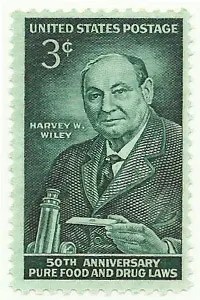
  • THE POISON SQUAD:

    Twelve Volunteers, One Obsessed Chemist, and the Government Experiment That Gave America the FDA

    A feature article for the Chronic Pain Patients Rights community

    A Basement Dining Room and a Sign That Said It All

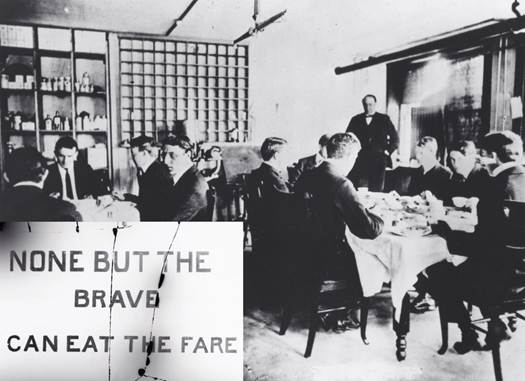
    In November 1902, twelve young government clerks filed into a basement dining room beneath the United States Department of Agriculture building in Washington D.C. They were healthy men in their twenties, mostly office workers living on modest salaries. They had volunteered for an experiment they did not entirely understand yet attracted, if they were honest, primarily by the promise of three exceptional meals a day, free medical care, and a modest stipend.

    Above the dining room door, a handwritten sign read: None but the brave can eat the fare.

    The food was, by all accounts, genuinely good. The chef, known to history only as Perry, was skilled and creative. The ingredients were impeccably fresh, sourced with extraordinary care by the chemist running the experiment: Dr. Harvey Washington Wiley, Chief Chemist of the USDA, a broad-shouldered Indiana-born scientist who had been fighting the same battle for nearly twenty years and was finally, at the cost of five thousand dollars in congressional appropriations and the digestive tracts of twelve willing young men, going to win it.

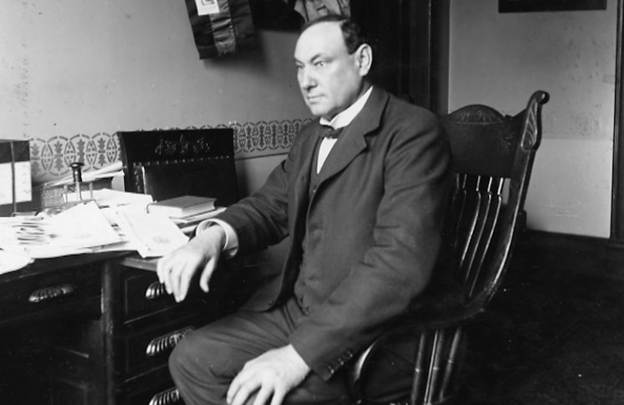
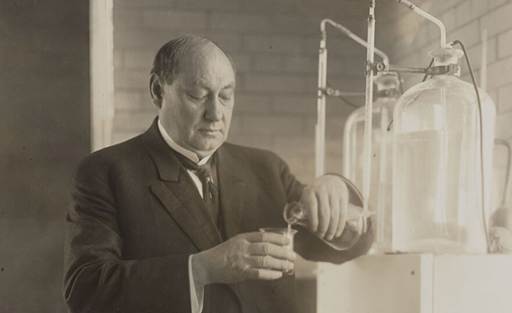
    Harvey Washington Wiley assembled the Poison Squad to test poisons in foods.

    Dr. Harvey Washington Wiley, Chemist/Researcher

    Wiley had laced their dinner with borax.

    This is the story of the Poison Squad,  the strangest, most consequential, and least-remembered government experiment in American history. It is the story of the founding data behind the Food and Drug Administration. And for the chronic pain patients rights community, it is a story that matters deeply: it established the principle, fought for and paid for in laboratory suffering, that the government has a responsibility to protect citizens from what is put in their food and medicine,  and that without that protection, industry will not provide it on its own.

    Harvey Washington Wiley: The Man Who Would Not Stop

    Harvey Washington Wiley was born in 1844 on a farm in Kent, Indiana. He served as a Union soldier in the Civil War, studied medicine, then abandoned clinical practice for chemistry — a decision that would shape American public health for generations. After a professorship at Purdue University, where he became its first chemistry instructor, he accepted an appointment in 1883 as Chief Chemist of the USDA’s Bureau of Chemistry.

    From his first days in Washington, Wiley’s focus was singular: the American food supply was being systematically adulterated, the public had no means of knowing it, and the government had no legal authority to stop it.

    Harvey Washington Wiley assembled the Poison Squad to test poisons in foods.

    The scale of the problem was staggering. At the turn of the 20th century, the industrialization of food production had outrun any regulatory framework. Food was no longer produced locally and consumed fresh; it was manufactured in large facilities, preserved with an array of chemicals, canned, packaged, and shipped across the country by rail. The commercial incentives for fraud were enormous, and the absence of any labeling requirement or testing mandate meant that manufacturers could put virtually anything in a product and sell it under any name.

    Cottonseed oil was blended into olive oil and sold at premium prices. Glucose syrup was bottled as honey. Canned peas were dyed green with copper sulfate — a fungicide — to simulate freshness. Rancid butter was treated with formaldehyde. Spoiling meat was treated with borax, which reacted with the proteins to firm the flesh and restore its appearance of freshness. And throughout the patent medicine market, products sold for children and adults alike contained morphine, cocaine, heroin, and alcohol in quantities that were never disclosed.

    Wiley documented all of this, published bulletins, testified before Congress, and watched, year after year, as the food industry’s lobbyists killed every proposed regulation. The industry demanded scientific proof of harm before any restriction could be imposed.

    Wiley decided to provide it, one additive at a time, fed to twelve young men in a government basement.

    The Hygienic Table Trials: What They Were, and How They Worked

    In 1902, Congress granted Wiley five thousand dollars and the authority to conduct what he called, in deliberately understated bureaucratic language, the Hygienic Table Trials. The Washington press corps, with more instinct for a headline, called his volunteers the Poison Squad. The name stuck immediately and permanently.

    Dr Wiley and The Poison Squad

    The experimental design was straightforward in conception, complicated in execution. Wiley would take healthy young volunteers, feed them controlled meals in a supervised setting, add a specific food preservative in measured quantities to their food, and document the physiological effects over a period of weeks. Each additive would be tested separately. The volunteers would serve as their own controls, eating clean food for a baseline period, then receiving the additive, then returning to clean food.

    Before he could test anything, Wiley faced a problem that reveals just how thoroughly adulterated the food supply already was: finding uncontaminated baseline ingredients. To test borax specifically, he needed food that contained no borax. This required him to personally contact dairy farmers, canning companies, and meat producers, monitor their operations, and verify with his own laboratory analysis that every ingredient arriving at the USDA kitchen was free of the compounds he was studying. Sourcing clean food in 1902 America was itself an investigation.

    Dr Wiley and The Poison Squad

    Volunteers were required to eat all meals at the supervised table and to abstain from any outside food during the study period. They were weighed before each meal. They underwent physician examinations twice weekly. Daily recordings were kept of their weight, temperature, and pulse. They collected their own bodily samples for laboratory analysis. And on days designated for respiratory testing, they breathed through a lime-water solution for three hours to test whether the additives affected respiration.

    Their only formal compensation was the meals themselves, medical care, and fifty dollars a month which was real money for a government clerk in 1902, but not obviously sufficient for what some of them would endure.

    The Six Compounds — And What They Did

    Over five years of rotating cohorts with approximately twelve active members at any given time, and perhaps twenty men participating across the full run of experiments, the Poison Squad tested six compounds that were in widespread commercial use in the American food supply.

    Borax

    The first compound tested, borax was chosen because it was among the most ubiquitous preservatives of the era. Applied to meat and dairy products, it interacted with proteins to firm up soft or spoiling tissue, restoring the visual appearance of freshness. Meat producers argued it was harmless; Wiley suspected otherwise.

    Borax

    The borax results came faster than Wiley had anticipated. By Christmas 1902, barely six weeks into the first trial, spirits among the volunteers were visibly low. Men were reporting headaches and stomach pain. Half of the first cohort dropped out before the fifth round, citing debilitating symptoms. The dosages had been on the high side, Wiley acknowledged but then, a heavy consumer of preserved meat and dairy could easily reach similar exposure levels in a single day of eating. His 477-page report on borax documented the cumulative effects with meticulous precision.

    Salicylic Acid

    In 1905, the squad turned to salicylic acid — an additive used across a wide range of preserved products. The results were among the most unambiguous of any compound tested: salicylic acid caused visible gastric bleeding in the volunteers. Wiley’s documentation of this finding was direct and unsparing.

    Salicylic acid

    Formaldehyde

    Perhaps the most disturbing compound in the study, formaldehyde was widely used as a preservative in dairy products — particularly milk. Its preservative properties were well understood; its effects on the human body were not. The Poison Squad tests showed that formaldehyde at commercial exposure levels strained the kidneys and produced acute illness in the volunteers.

    Formaldehyde, used as  a food preservative
    Formaldehyde, used as  a food preservative

    The formaldehyde trials also produced the experiment’s most legally fraught episode. One member of the Squad died during the experimental period — his death attributed to tuberculosis. His family believed the experiments had weakened him and threatened to sue the government. Wiley could not fully exclude the possibility that the extended exposure to preservatives had compromised the man’s resistance to infection. The threat of litigation was real.

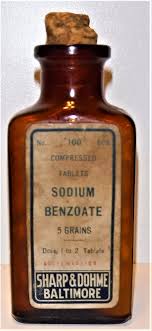
    Sodium Benzoate and Sodium Sulfite

    Sodium Benzoate
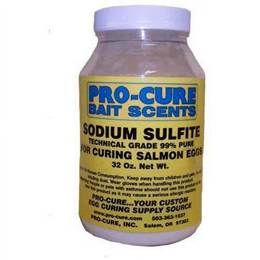
    Sodium Sulfite

    The sodium sulfite trials had to be stopped before completion — the volunteer reactions were too severe to continue. Of twelve men in the sodium benzoate cohort, only three completed the full experimental protocol. The others withdrew citing symptoms that ranged from persistent nausea to blood vessel damage and severe weight loss.

    Copper Sulfate and Saccharin

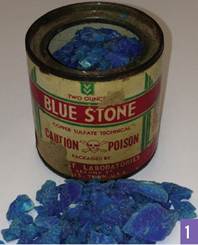
    Copper Sulfate
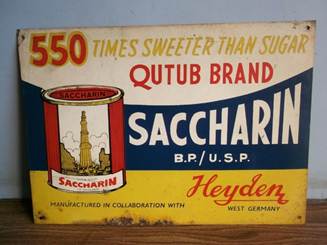
    Saccharin

    Copper sulfate, used primarily as a colorant to give canned vegetables an artificially vibrant hue, produced measurable harm in the volunteers. Saccharin, which would go on to become the subject of regulatory controversy for decades, was also tested — with results that satisfied neither its critics nor its defenders, and that left Wiley in a prolonged battle with the Referee Board of Consulting Scientists established by the Secretary of Agriculture to review his findings.

    By the end of the Squad’s operational period in 1907, those who had not withdrawn from the experiments were, in the assessment of observers at the time, showing signs of protracted physical deterioration. The sign above the dining room door had been, it turned out, an accurate warning.

    The Media Sensation — And the Million Letters

    Whatever the scientific limitations of Wiley’s Hygienic Table Trials, critics then and now have noted the absence of blinding, the sometimes excessive dosages, and the small sample sizes, the Poison Squad generated a level of public attention that no amount of methodological critique could diminish.

    Reporters showed up at the USDA basement regularly. The Washington Post covered the experiments with a combination of genuine alarm and barely suppressed delight. Supreme Court justices were heard making jokes about the Squad in public. Minstrel shows incorporated the volunteers into their acts. A poet named S.W. Gillian wrote a widely circulated verse that imagined the Squad’s menu: prussic acid for breakfast, morphine stew for lunch, carbolic acid to drink. The poem was funny and horrifying in equal measure, which made it perfect for its moment.

    Wiley issued a gag order on his volunteers, alarmed that press coverage would compromise the scientific integrity of the studies. The order had negligible effect. The story was too consequential for the public to release.

    The organized response came primarily from women. The General Federation of Women’s Clubs, the National Association of Colored Women, and the National Consumers League understood with particular urgency what the Poison Squad’s findings implied: the food that mothers bought for their families — trusting the labels, trusting the stores, trusting the regulatory system they believed existed — was being systematically contaminated by an industry that answered to no one and faced no consequences for harm.

    Wiley traveled extensively, speaking before dozens of women’s groups across the country. Ladies’ Home Journal, then one of America’s most widely read magazines, ran features warning mothers about adulterated foods. The campaign built steadily, and by the time the political moment arrived, more than one million women had written letters to the White House in support of food safety legislation. It remains one of the largest citizen lobbying efforts in American history.

    The Industry Fights Back — and Loses

    The food industry did not accept Wiley’s findings without a fight. Their response followed a pattern that will be familiar to anyone who has studied the patent medicine industry’s response to Samuel Hopkins Adams, or the tobacco industry’s response to cancer research, or Purdue Pharma’s response to OxyContin addiction data: fund friendly scientists, suppress adverse findings, attack the methodology, and lobby against any legislation that would require disclosure.

    Industry representatives argued that consumers never ate enough of any single additive to reach the dosages Wiley had tested. They commissioned academic scientists — including Ira Remsen of Johns Hopkins University, a legitimate chemist of high standing — to review and challenge Wiley’s findings. The Secretary of Agriculture, responsive to industry pressure, established a Referee Board of Consulting Scientists to re-examine Wiley’s conclusions on sodium benzoate, and suppressed his initial report on the compound.

    That report was ultimately published by accident. With the Secretary on vacation, a staffer misunderstood his instructions and ordered the suppressed benzoate report printed. By the time the Secretary returned, it was in circulation. Wiley treated the mishap as a victory.

    The industry’s rearguard action bought time but could not ultimately hold. The Poison Squad’s findings, combined with Samuel Hopkins Adams’s eleven-part exposé of the patent medicine industry in Collier’s Weekly, the publication of Upton Sinclair’s The Jungle, and the organizing power of women’s groups across the country, created a political coalition that Congress could no longer resist.

    Sam Hopkins Adams, a Journalist

    Journalist Samuel Hopkins Adams

    The Pure Food and Drug Act — and the Birth of Consumer Protection

    On June 30th, 1906, President Theodore Roosevelt signed both the Pure Food and Drug Act and the Meat Inspection Act into law. The Pure Food and Drug Act, known informally as the Wiley Act, was the first federal legislation to prohibit false or misleading statements on food and drug labels, and to ban the sale of adulterated or mislabeled products in interstate commerce.

    For the patent medicine industry, the labeling requirement was particularly devastating. A bottle of Mrs. Winslow’s Soothing Syrup now had to disclose its morphine content. A woman’s tonic advertised as a cure for nervous disorders had to list its alcohol percentage. A consumption cure had to identify its medicinal ingredients which, in the case of products like Peruna, totaled less than half of one percent of the contents. Transparency, it turned out, was enough. Sales of opiate-containing patent medicines fell thirty-three percent within a year of the law’s passage.

    The impact on food preservatives was more gradual but equally significant. Manufacturers who had fought the law for decades began, quietly, to reformulate their products. Borax left the food supply. Formaldehyde in dairy products was phased out. Copper sulfate was no longer used to color canned vegetables. The compounds that Wiley’s volunteers had endured years of illness to document were removed — not through the market correcting itself, not through corporate conscience, but through the force of law.

    Wiley’s Bureau of Chemistry, which had grown from a small office to a significant federal agency under his leadership, assumed enforcement responsibility for the 1906 Act. Between 1906 and 1912, its staff expanded from 110 to 146 employees, and its appropriations grew from $155,000 to nearly $1 million annually.

    Wiley himself left the USDA in 1912, frustrated by ongoing industry pressure on his enforcement efforts and by conflicts with the Secretary of Agriculture over the benzoate findings. He spent the following eighteen years as director of the laboratories at the Good Housekeeping Institute, where he continued testing consumer products and writing about food safety until his death in 1930 at age eighty-five.

    The Legacy: From the Poison Squad to the FDA

    The regulatory architecture that Wiley’s work made possible evolved through a series of legislative expansions over the following decades. The Food, Drug, and Insecticide Administration established in 1927 was reorganized and renamed the Food and Drug Administration in 1930. The Food, Drug, and Cosmetic Act of 1938 passed after a sulfonamide drug disaster killed more than one hundred people, gave the FDA the authority to require proof of safety before a new drug could enter the market, extending the principle Wiley had established in 1906.

    Everything that follows from those authorities: the clinical trial requirements, the labeling mandates, the pre-approval process for new medications, the ability to recall dangerous products, the standards that govern what can be claimed in a pharmaceutical advertisement — all of it traces its founding logic to the Hygienic Table Trials of 1902.

    Deborah Blum, whose 2018 book The Poison Squad brought Wiley’s story to a new generation of readers and was adapted into an American Experience documentary film in 2020, described his significance precisely: it was the first time that the United States accepted its role in the business of consumer protection, as opposed to their traditional stance of protecting big industries.

    One of Wiley’s original volunteers, William Robinson, lived to see the FDA become a major federal institution, the pharmaceutical regulatory system develop into the most elaborate in the world, and food safety become an accepted baseline expectation of modern life. He died in 1979 at the age of ninety-four. Whether the borax helped is a question history does not resolve.

    Why This Story Matters for the Chronic Pain Community

    For advocates in the chronic pain patients rights movement, the Poison Squad story is not simply historical curiosity. It is the founding narrative of the regulatory system they live within, a system that, at its best, is designed to protect patients from what happened with laudanum, Mrs. Winslow’s Soothing Syrup, and OxyContin.

    The principle Wiley fought for, that the government has a responsibility to require proof of safety before a substance reaches consumers, and to mandate disclosure of what products actually contain, was established against ferocious industry opposition, at real human cost, through the dedicated work of a chemist who spent twenty years being told that proof of harm did not yet exist.

    That principle is the foundation of the FDA’s authority to evaluate new drugs before approval. It is why pharmaceutical companies must conduct clinical trials. It is why labels must disclose active ingredients and their quantities. It is why the FDA can require black box warnings on drugs with serious adverse effects. All of these protections exist because Harvey Wiley and twelve volunteers sat down to dinners laced with borax in a Washington basement and because a million women wrote letters to the White House demanding that their government protect them.

    The laudanum epidemic was made possible, in part, by the absence of these protections. The OxyContin epidemic was made possible, in part, by the successful subversion of these protections through regulatory capture, marketing manipulation, and the systematic suppression of adverse data. Both epidemics tell the same story: when the system functions as designed, it saves lives. When it is corrupted or dismantled, people die.

    Wiley understood something that remains true today. The market will not fix the food supply. Industry will not test its own products for harm. Corporate profit, absent external constraint, will prioritize revenue over safety. The regulatory framework that exists to prevent this is not a bureaucratic inconvenience. It is the accumulated consequence of real suffering — documented by real scientists, paid for by real volunteers, and fought for by real citizens who decided that their government owed them more than the freedom to be poisoned without their knowledge.

    The Poison Squad gave us the tools. The question, in every generation, is whether we use them.

    — END —

    Key Sources: Deborah Blum, The Poison Squad: One Chemist’s Single-Minded Crusade for Food Safety at the Turn of the Twentieth Century (2018); PBS American Experience, “The Poison Squad” (2020); FDA Historical Archive; Library of Congress Inside Adams blog; Science History Institute; Mental Floss; Atlas Obscura; Harvey Washington Wiley, Bulletin No. 84, Parts I–V, USDA Bureau of Chemistry (1902–1908); Pure Food and Drug Act (1906).

  • What Is Medically Wrong With Donald Trump?

    What They May Not Be Telling Us

    A Clinical Analysis for Entertainment Purposes

    By a Retired MD, PhD (Biochemistry) | Orthopedic & Spine Surgery | Chronic Pain Management | Medical Aesthetics

    ⚠ MEDICAL DISCLAIMER: This article is produced for ENTERTAINMENT PURPOSES ONLY. The author is a retired MD and PhD in Biochemistry, with specialization in Orthopedic Surgery, Spine Surgery, Chronic Pain Management, and Medical Aesthetics. Nothing herein constitutes medical advice, diagnosis, or treatment. All analysis is speculative, based solely on publicly available observations, and offered as an intellectual exercise in clinical reasoning and differential diagnosis. No private medical records have been accessed or used. All individuals are presumed healthy unless proven otherwise by their own treating physicians.

    Doctors notice things. It is an occupational habit that never fully retires with the practitioner. And over the past several years, a growing number of physicians — watching the same publicly available footage, the same press conferences, the same photographs as everyone else — have been quietly exchanging observations that the mainstream media has largely declined to discuss with clinical rigor.

    This article attempts to do what a responsible multidisciplinary medical team would do: look at the observable signs, organize them by body system, apply evidence-based clinical reasoning, and arrive at the most coherent explanation the evidence supports. It is offered as an intellectual exercise in differential diagnosis — not as a definitive medical conclusion, not as a political statement, and emphatically not as a substitute for proper medical evaluation.

    What the evidence suggests is not one single disease. It is a constellation — a multi-system picture that, when assembled carefully, tells a coherent and concerning story.

    — ✦ —

    The Heart: What the Swollen Ankles and Bruised Hands Reveal


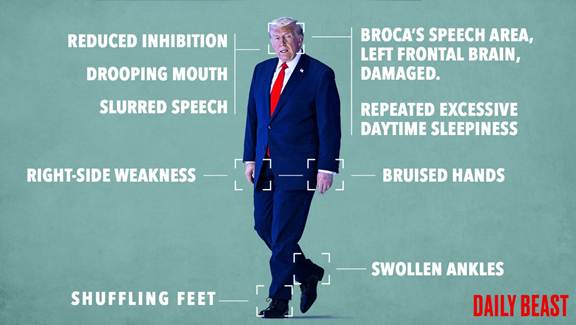
    Start with the ankles. Bilateral pitting edema — visible swelling in both lower legs simultaneously — is not a cosmetic curiosity. In clinical medicine, it is a sign that demands explanation. When an elderly male patient presents with it, the differential includes cardiac failure, venous insufficiency, renal dysfunction, or medication side effects. The key word is bilateral: unilateral swelling points to a local problem; bilateral swelling points upward, toward the whole-body circulation.

    Swelling in both ankles is a diagnostic clue that may signify Cardiovascular disease.

    In a patient with Donald Trump’s documented profile — central abdominal obesity, a diet reported to be heavy in saturated fat and processed food, advanced age, and male sex — the most probable cardiac explanation is right-sided heart failure secondary to longstanding hypertensive cardiovascular disease. The heart, overworked for decades, begins to lose the battle of fluid management. The result pools in the legs.

    Then there is the bruising. Recurring discoloration on the dorsal surface (the back) of the hands, sometimes appearing in photographs and reportedly covered with heavy cosmetic product. To a clinician, this is a recognizable pattern: it is what repeated IV access looks like. The dorsum of the hand is a standard venipuncture site. In an elderly patient with fragile veins, or one taking anticoagulants — blood thinners commonly prescribed for atrial fibrillation — the bruising from regular IV access is inevitable, dramatic, and persistent. The concealment is itself medically significant: it suggests an active effort to hide evidence of ongoing intravenous medical treatment.

    “The concealment is itself medically significant: it suggests an active effort to hide evidence of ongoing intravenous medical treatment.”

    — ✦ —

    Bruising may signify low platelets or IV therapy.

    The Brain: Gait, Speech, and the Signs of Neurological Decline

    Neurologists have a saying: watch them walk in. Gait, the way a person moves through space, is one of the most diagnostically rich sources of information in clinical medicine. And the publicly available footage of Trump in recent years reveals a pattern that movement disorder specialists would find notable: shortened stride length, a forward-flexed posture, reduced arm swing, and visible difficulty navigating inclines.

    This constellation is called Parkinsonian gait. It does not necessarily mean Parkinson’s disease. A clinically identical presentation emerges from Vascular Parkinsonism — a condition caused by multiple small strokes or ischemic lesions affecting the basal ganglia, the deep brain structures that coordinate movement. Critically, vascular Parkinsonism tends to affect the lower body first: gait and balance deteriorate while the hands may be spared the classic pill-rolling tremor. And it almost always co-occurs with cognitive impairment, because the same vessels feeding the motor circuits also feed the frontal lobes.

    The President has a Gait disturbance and a postural abnormality which may suggest a neurological condition

    The speech patterns deserve equal attention. Verbal perseveration — the compulsive repetition of words, phrases, or themes despite the absence of a justifying stimulus — is a reliable clinical sign of frontal lobe executive dysfunction. Word-finding failures, phonemic substitutions, mid-sentence topic drift: these are not the normal stumbles of public speaking. They are the specific fingerprints of a central nervous system process affecting language networks and executive control.

    — ✦ —

    Sleep Architecture: The 3 AM Tweets and the Afternoon Naps

    The paradox is well documented: late-night social media activity timestamped well past midnight, combined with visible daytime somnolence — the nodding off during official meetings and ceremonies that has been captured on camera multiple times. To a sleep medicine physician, this is not erratic behavior. It is a textbook presentation of severe, untreated Obstructive Sleep Apnea.

    OSA occurs when the upper airway collapses during sleep, blocking airflow. The brain triggers micro-arousals to restore breathing — potentially hundreds of times per night — preventing the patient from ever achieving the deep, restorative sleep stages that the body requires. The result is chronic nocturnal oxygen deprivation and profound daytime somnolence. And the sequelae extend far beyond fatigue: OSA strains the cardiovascular system, damages frontal white matter and hippocampal circuitry, disrupts hormonal regulation, and creates the exact pattern of daytime sleep attacks we observe.

    The likely response — stimulant medications to maintain daytime wakefulness — adds its own layer of risk. Amphetamine-class drugs in the context of unmanaged OSA and probable cardiovascular disease elevate arrhythmia risk, elevate blood pressure, and — critically — can exacerbate paranoia, hostility, impulsivity, and grandiosity.

    President Donald Trump is rumored to be an Adderall user.

    — ✦ —

    The Mind: Confabulation, Disinhibition, and the Frontal Lobe

    This is the territory where clinical observation requires the greatest care and the greatest honesty. The behavioral patterns that have become increasingly prominent — the confident assertion of easily disproved facts, the perseverative return to fixed themes, the escalating hostility and retributive focus, the apparent inability to modulate emotional responses — have a specific neurological explanation.

    Confabulation is not lying in the deliberate sense. It is a memory phenomenon in which the brain, facing a gap, spontaneously generates plausible information to fill it — without awareness that the generated information is fabricated. The person is not performing deception; they are experiencing a memory circuit failure that substitutes construction for recall. It is seen in early and mid-stage dementia, in frontal lobe syndromes, and in vascular cognitive impairment.

    Frontal disinhibition explains the rest. The prefrontal cortex is the brain’s executive brake system — it modulates impulsive, reactive, and emotional outputs from deeper structures. When it is damaged by ischemia, neurodegeneration, or chronic hypoxia, the brake is released. Pre-existing personality traits — whatever their nature — are not replaced; they are amplified and rendered context-blind. The filter is gone.

    “Pre-existing personality traits are not replaced by frontal damage — they are amplified and rendered context-blind. The filter is gone.”

    — ✦ —

    The Treatment Nobody Is Discussing

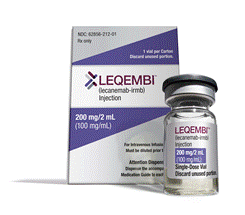
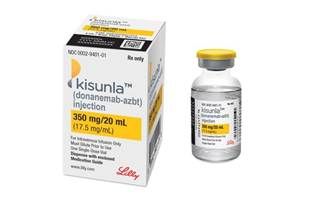
    The FDA has approved two revolutionary Alzheimer’s therapies in recent years — Lecanemab (Leqembi) and Donanemab (Kisunla) — that work by clearing amyloid plaques from the brain via intravenous infusion. Lecanemab requires infusions every two weeks. Both drugs mandate a rigorous monitoring protocol: multiple MRI brain scans, and regular cognitive assessments using validated instruments such as the MMSE and MoCA, to detect a potentially life-threatening side effect called ARIA — amyloid-related brain swelling and microhemorrhage.

    Leqembi is an IV biologic medicine showing promise in the removal of amyloid deposits in patients with Alzheimer's dementia
    Kisunla is an IV biologic medicine showing promise in the removal of amyloid deposits in patients with Alzheimer's dementia

    These monitoring requirements provide the most coherent medical explanation for reports of repeated private cognitive assessments. The bruising on the dorsal hands provides the most coherent evidence of ongoing IV access on a regular schedule. The concealment with makeup provides the behavioral evidence of deliberate effort to hide this treatment from public view.

    IV in the hands of older people may cause significant brusing, which is compounded if the IV therapy is frequent and they are aspirin or other anticoagulant

    If this hypothesis is correct, the prognosis follows the natural history of mixed dementia: a step-wise decline punctuated by vascular events, each producing a measurable drop in function, toward increasing incapacitation over a period of years. Anti-amyloid therapy may slow the Alzheimer’s component — it cannot reverse what has already occurred.

    — ✦ —

    What This Means — And What to Watch For

    A leader with unmanaged obstructive sleep apnea, probable cardiovascular disease, frontal lobe disinhibition, and possible active dementia treatment presents governance risks with no parallel in ordinary physical illness. Impulsive decisions in high-stakes environments. Inability to integrate contrary advice. Confabulated strategic reasoning acted upon with full conviction. These are not hypothetical concerns. They are the documented functional consequences of frontal lobe dementia in any patient — regardless of who that patient is.

    Watch, in the coming months, for increasing frequency of visible word-finding failures in unscripted settings. Growing reliance on teleprompter for remarks that previously required none. Any frank fall or neurological event in public. Increasing delegation of previously personal decisions. Any sudden absence from public view following what is described as a minor illness. These are the clinical milestones of progression.

    The governed deserve transparency about the cognitive capacity of those who govern them. Not because of politics, but because the decisions made in that office carry consequences that extend to every human being on earth. That is not a medical opinion. It is simply true.

    — ✦ —

    ⚠ MEDICAL DISCLAIMER: This article is produced for ENTERTAINMENT PURPOSES ONLY. The author is a retired MD and PhD in Biochemistry, with specialization in Orthopedic Surgery, Spine Surgery, Chronic Pain Management, and Medical Aesthetics. Nothing herein constitutes medical advice, diagnosis, or treatment. All analysis is speculative, based solely on publicly available observations, and offered as an intellectual exercise in clinical reasoning and differential diagnosis. No private medical records have been accessed or used. All individuals are presumed healthy unless proven otherwise by their own treating physicians.

    This blog article is an accompaniment to a six-part medical analysis video script series covering cardiovascular, neurological, sleep, psychiatric, treatment, and prognostic evidence. For entertainment purposes only.

  • The Silent Killers: America’s Top 5 Causes of Death — And How to Fight Back

    Every year, millions of Americans lose their lives to diseases that are, in many cases, preventable. Understanding what’s putting us at risk — and what we can do about it — is one of the most powerful tools we have for living longer, healthier lives. Here’s a look at the five leading causes of death in the United States (excluding accidents and trauma), the risk factors behind each, and the steps you can take to reduce your risk.

    1.   Heart Disease — The #1 Killer

    Heart disease claims more than 700,000 American lives each year, making it the nation’s top cause of death by a wide margin. It encompasses a range of conditions — coronary artery disease, heart failure, and arrhythmias among them — all of which impair the heart’s ability to function. Risk factors include high blood pressure, high cholesterol, smoking, obesity, diabetes, physical inactivity, and a family history of heart disease. Age and gender also play a role, with men facing higher risk earlier in life.

    Prevention starts with lifestyle. A heart-healthy diet rich in fruits, vegetables, whole grains, and lean proteins can significantly lower your risk. Regular aerobic exercise — even 30 minutes of walking most days — strengthens the heart. Quitting smoking, managing stress, and keeping blood pressure and cholesterol in check through medication when needed are also key. Routine checkups are your early warning system; don’t skip them.

    2.   Cancer — A Broad and Complex Threat


    Cancer is not one disease but hundreds, and it remains the second leading cause of death in the US, accounting for nearly 600,000 deaths annually. Lung, colorectal, breast, and prostate cancers are among the most common culprits. Risk factors vary by cancer type but commonly include tobacco use, obesity, excessive alcohol consumption, sun exposure, certain infections (like HPV and H. pylori), and genetic predispositions.

    Many cancers are highly preventable or detectable early. Not smoking is the single most impactful step you can take. Maintaining a healthy weight, limiting alcohol, using sunscreen, and getting vaccinated against cancer-linked viruses (HPV, hepatitis B) all reduce risk. Equally important: get screened. Colonoscopies, mammograms, Pap smears, and low-dose CT scans for long-term smokers catch cancer early, when it’s most treatable.

    3.   COVID-19 and Chronic Lower Respiratory Disease — Breathing Under Threat


    Chronic lower respiratory diseases — including COPD, emphysema, and chronic bronchitis — affect millions and consistently rank among the top causes of death. Smoking is by far the most significant risk factor, responsible for roughly 85% of COPD cases. Long-term exposure to air pollutants, chemical fumes, and dust also contributes. Asthma, while often manageable, can be life-threatening if poorly controlled.

    Prevention centers heavily on protecting your lungs. Quit smoking — it’s never too late, as lung function can partially recover after cessation. Avoid secondhand smoke and limit exposure to occupational hazards. If you work in construction, mining, or manufacturing, proper protective equipment is essential. For those already diagnosed, pulmonary rehabilitation, medications, and oxygen therapy can dramatically improve quality of life.

    4.   Stroke — When Seconds Count

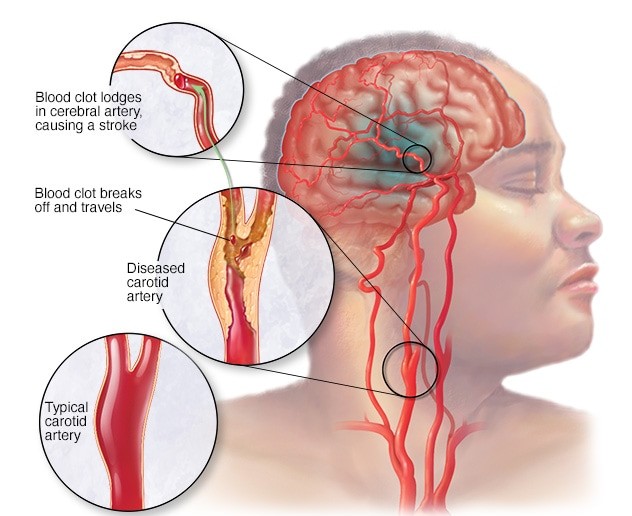
    Stroke is the fifth leading cause of death and a leading cause of long-term disability in the US. It occurs when blood flow to the brain is blocked (ischemic stroke) or when a blood vessel bursts (hemorrhagic stroke). Risk factors mirror those of heart disease: high blood pressure, high cholesterol, smoking, diabetes, obesity, atrial fibrillation, and a sedentary lifestyle. Age and family history are also significant contributors.

    Controlling blood pressure is the single most effective strategy for stroke prevention — even modest reductions in blood pressure lower risk substantially. Managing diabetes, eating a low-sodium diet, exercising regularly, and not smoking all help. Know the warning signs (sudden numbness, confusion, trouble speaking or seeing, severe headache) and act fast — calling 911 immediately can mean the difference between recovery and permanent disability.

    5.   Alzheimer’s Disease — Protecting the Brain

    Alzheimer’s disease and other dementias are becoming increasingly prominent causes of death as America’s population ages. Alzheimer’s is a progressive neurological disorder that destroys memory and cognitive function, ultimately affecting the body’s ability to carry out basic processes. Age is the greatest risk factor, but genetics (particularly the APOE-e4 gene variant), cardiovascular risk factors, traumatic brain injury, and social isolation also contribute.

    While there’s no guaranteed prevention, research increasingly shows that what’s good for the heart is good for the brain. Regular physical activity, a Mediterranean-style diet, quality sleep, mental stimulation, and strong social connections are all associated with lower dementia risk. Managing cardiovascular risk factors — blood pressure, cholesterol, blood sugar — and avoiding excessive alcohol and smoking also appear protective. Early diagnosis can help people plan and access treatments that slow progression.

    The Bottom Line

    The five conditions above account for well over half of all deaths in the United States each year — but they share something important in common: a significant portion of that toll is preventable. Lifestyle choices, early screening, and consistent medical care can dramatically shift the odds in your favor. It’s never too early — or too late — to start taking your health seriously. Talk to your doctor, know your numbers, and take small steps every day. Your future self will thank you.

  • The Brilliant Mind of Percy Julian: A Legacy Forged in Science and Perseverance

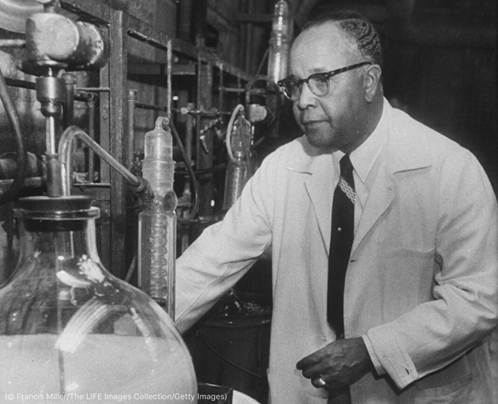
    There are scientists who change the world quietly, their discoveries rippling outward long after their names have faded from public memory. Percy Lavon Julian was not meant to be forgotten — and thankfully, he isn’t. His story is one of breathtaking intellect, unyielding determination, and a refusal to let the world’s smallness limit the size of his dreams.

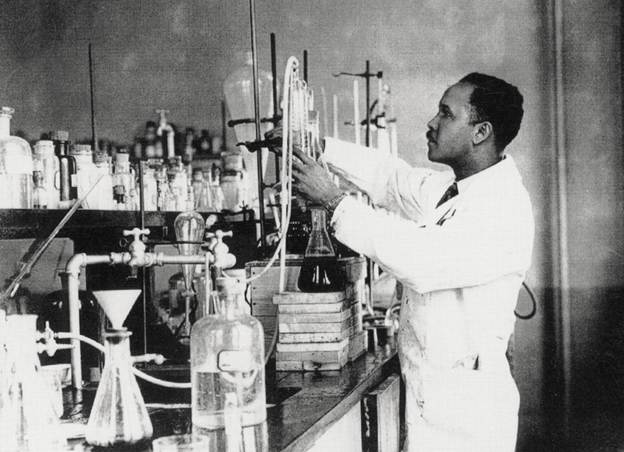
    Percy Julian, Chemist

    A Young Mind Reaches Upward

    Percy Julian was born on April 11, 1899, in Montgomery, Alabama — a time and place that offered little encouragement to a Black child with ambitions. His grandfather had been enslaved, and the educational opportunities available to young Percy were painfully limited. Montgomery’s public schools for Black students ended at eighth grade. That could have been the end of the story. Instead, it was just the beginning.

    His parents, James and Elizabeth Julian, made sure their six children understood that education was non-negotiable. Percy enrolled at DePauw University in Greencastle, Indiana, in 1916, but he arrived underprepared due to his inadequate schooling. He tackled high school subjects at night while excelling in his college courses during the day. The determination was extraordinary. By 1920, he graduated valedictorian of his class.

    He went on to earn a master’s degree from Harvard University and, after facing repeated rejection from Ph.D. programs in the United States, rejections rooted not in his qualifications but in his race, he traveled to Vienna, Austria. At the University of Vienna, he earned his doctorate in chemistry in 1931 under the renowned chemist Ernst Späth. Julian returned home armed with world-class expertise and a fire that racism had only made burn brighter.

    The Harvard Chapter — and Its Bitter Aftermath

    Percy Julian’s time at Harvard is a study in contradictions. He was brilliant enough to be welcomed into one of the world’s most prestigious institutions, yet the racism of the era ensured he was never truly welcomed at all. Despite his exceptional record, Harvard declined to offer him a teaching fellowship, fearing that white students from the South would object to being taught by a Black man.

    It was a rejection that stung — but it did not stop him. After returning from Vienna, Julian joined the faculty at DePauw, where he and colleague Josef Pikl achieved one of the most celebrated feats in organic chemistry: the first synthesis of physostigmine, a compound used to treat glaucoma. The accomplishment silenced doubters and announced Julian’s genius to the scientific world.

    Physostigmine, a glaucoma treatment was synthesized by Percy Julian

    Physostigmine

    Navigating Racism at Every Turn              

    Even as his star rose, racism followed Julian like a shadow. When he was hired as director of research at the Glidden Company in Chicago in 1936, a historic appointment that made him one of the first Black scientists to lead a major industrial research lab, the city of Oak Park refused to allow him and his family to purchase a home there. Twice, their new home was attacked: first with a smoke bomb, then with dynamite. Percy Julian did not retreat. He stayed, and he thrived.

    Scientific Contributions That Transformed Medicine

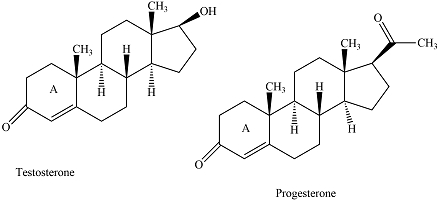
    Julian’s work at Glidden was nothing short of revolutionary. He developed a way to mass-produce progesterone and testosterone from soybeans, making hormones that had previously been rare and expensive suddenly affordable and widely available. His synthesis of cortisone from plant sterols dramatically lowered the cost of treating arthritis, putting relief within reach for millions of people.

    Testosterone and Progesterone
    Cortisone

    Cortisone

    He also developed a soy-based foam used by the U.S. Navy to extinguish oil and gasoline fires — saving countless lives during World War II. In total, Julian held more than 130 patents.

    Honors and Legacy

    In 1947, Julian founded his own company, Julian Laboratories, becoming one of the first Black Americans to own a pharmaceutical firm. He received the NAACP’s Spingarn Medal in 1947 and was elected to the National Academy of Sciences in 1973, one of the highest honors in American science. In 1990, he was inducted into the National Inventors Hall of Fame.

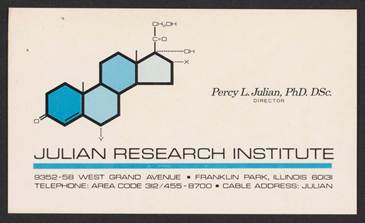
    Julian Research Institute

    Percy Julian passed away in 1975, but his legacy is very much alive. A Chicago school, a research institute, and a postage stamp all bear his name. More importantly, every person whose arthritis has been treated, every sailor whose life was saved by firefighting foam, carries a small piece of his brilliance.

  • The Secret Language of Bacteria: How Dr. Bonnie Bassler Cracked the Code — and May Have Found the Future of Antibiotics

    Imagine a world where bacteria don’t just float around aimlessly, multiplying without purpose. Instead, they talk to each other. They count their numbers, read the crowd, assess their neighbors, and then — only when enough of them have gathered — launch a coordinated attack on their host. It sounds like science fiction. But it’s science fact, and one woman has spent her career proving it to a skeptical world.

    Dr. Bonnie L. Bassler, molecular biologist, Princeton professor, and Howard Hughes Medical Institute Investigator, has fundamentally changed how humanity understands the microbial world — and, in doing so, may have unlocked a revolutionary new path forward in the fight against antibiotic-resistant superbugs.

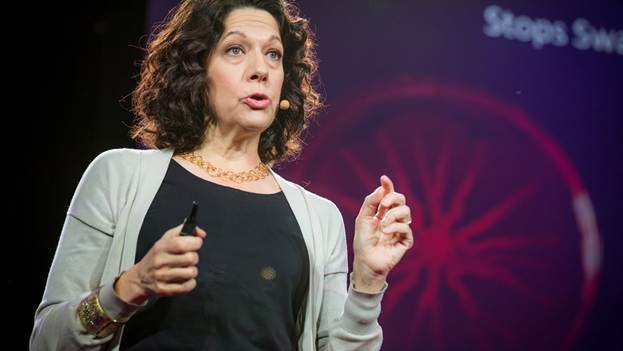
    Dr. Bonnie Bassler, Chair of the Department of Molecular Biology at Princeton

    From Veterinary Dreams to a Life with Bacteria

    Bonnie Lynn Bassler was born in 1962. As an undergraduate at the University of California, Davis, she enrolled intending to become a veterinarian. That path changed when she landed in the laboratory of Dr. Frederic Troy II, a biochemistry and molecular medicine professor who assigned her to a project studying bacterial enzymes, specifically, an enzyme in E. coli that cleaved sugars from membrane glycoproteins.

    At first, nineteen-year-old Bassler was underwhelmed. Bacteria? She wanted to study something important. But that early project lit a fire in her that would never go out. She earned her B.S. in Biochemistry from UC Davis, then went on to complete her Ph.D. in Biochemistry from Johns Hopkins University in 1990.

    The turning point came near the end of her doctoral studies. At a scientific conference, she heard a seminar about Vibrio fischeri, a bioluminescent marine bacterium that only glows when present in large numbers. A single bacterium, she learned, doesn’t bother to make light; it would be pointless. But when enough bacteria accumulate, they send each other chemical signals and, in coordinated unison, begin to glow. The bacteria were, in essence, taking a census of themselves and only acting once the community reached a critical mass.

    Bassler was transfixed. She immediately sought out and secured a postdoctoral fellowship with Dr. Michael R. Silverman at the Agouron Institute in La Jolla, California, the scientist who had pioneered early quorum sensing research. She worked with Silverman from 1990 to 1994, and it was during this period that her most foundational discoveries began to take shape.

    Discovering a Universal Bacterial Language

    Working with the related bacterium Vibrio harveyi, Bassler made a discovery that would redirect the course of microbiology. Rather than finding the single signaling circuit she had set out to study, she found two parallel communication circuits — two different molecules and two corresponding receptors working simultaneously. Even more astonishing: some of the bacteria activating V. harveyi’s second quorum-sensing system were not Vibrio bacteria at all. They were intestinal bacteria, a species from an entirely different world, speaking what appeared to be a shared chemical dialect.
    Vibrio Harveyi fluorescing on an agar plate

    This was the seed of a revolutionary idea: perhaps bacteria across vastly different species share a universal chemical language — a signal molecule that any bacterium can both produce and understand, enabling cross-species communication on a population-wide scale.

    In 1994, Bassler joined the Princeton University faculty — a position she has never left. There, she and her growing team confirmed that quorum sensing is not a quirk of glowing marine bacteria; it is the norm in the bacterial world.

    The key players are small chemical molecules called autoinducers. Bacteria continuously produce and release these molecules into their environment. As the bacterial population grows, autoinducer levels accumulate. When a threshold concentration is reached, bacteria collectively detect the buildup, “know” that sufficient numbers surround them, and simultaneously switch on or off a suite of genes changing behavior en masse, like a city switching on its streetlights at dusk.

    Polymicrobial Populations and the Chemistry of Community Control

    Autoinducers AI 2 the chemical signal class which were the language of bacterial species were discovered by Dr. Bonnie Bassler.

    What makes Bassler’s research particularly groundbreaking — and immediately relevant to medicine — is what she discovered about how bacteria communicate across species in polymicrobial communities: environments, like the human body, where many different species of bacteria coexist simultaneously.

    Her laboratory identified and characterized AI-2 (Autoinducer-2), a family of structurally related small chemical molecules that serve as a kind of interspecies signal — a common tongue. Unlike species-specific autoinducers that only members of one bacterial clan can understand, AI-2 can be produced and detected by a wide range of bacterial species. In a polymicrobial population, these signals function as population regulators: they communicate not just “how many of us are there?” but also “who else is out there?” and “are these neighbors friends or rivals?”

    This is the crux of the discovery. In a complex bacterial community such as the human gut, lungs, oral cavity, or a wound site different subpopulations of bacteria are receiving and interpreting a blend of chemical signals that tell them when to grow, when to hold back, when to produce toxins, when to form protective biofilms, and when to stand down. The interplay of these signals actively regulates the composition and behavior of the entire community.

    The methods Bassler’s lab employs to uncover these mechanisms are impressively multidisciplinary. Her team combines genetics, biochemistry, structural biology, chemistry, bioinformatics, microarray analysis, mathematical modeling, and engineering to dissect how these signaling networks are built, how they process information, and how they might be exploited therapeutically.

    The Implications for Antibiotic Therapy

    This research has profound implications for medicine — particularly at a time when antibiotic resistance has become one of the most pressing global health crises of the 21st century.

    Traditional antibiotics work by one of two mechanisms: they kill bacteria outright, or they stop bacterial growth. Both approaches create enormous selective pressure: any bacterium that happens to have a mutation allowing it to resist the drug survives, multiplies, and passes on that resistance. The result is the parade of multi-drug-resistant “superbugs” now threatening hospitals around the world.

    Bassler’s approach represents a fundamentally different philosophy. Rather than killing bacteria, anti-quorum-sensing therapy targets their ability to communicate and coordinate. Without the ability to “count” each other and read chemical signals, bacteria cannot launch their coordinated virulence attacks. They cannot properly form biofilms. They cannot regulate their population dynamics. They become, in Bassler’s memorable phrase, unable to “behave badly.”

    Critically, a bacterium that cannot sense quorum signals does not gain a significant growth advantage over its neighbors — meaning the selective pressure that drives antibiotic resistance is far weaker. This makes anti-quorum-sensing drugs potentially far more durable as therapies than traditional antibiotics.

    Bassler’s lab has developed synthetic molecules structurally related to AI-2 and to other autoinducers that can either mimic or block the natural quorum-sensing signals. In animal models, some of these compounds have demonstrated the ability to halt infection from pathogens of global significance, including Vibrio cholerae (the cause of cholera), Staphylococcus aureus, and Pseudomonas aeruginosa.

    Bassler has also shown that quorum-sensing disruption can prevent bacteria from adhering to medical implants and devices — one of the most intractable sources of hospital-acquired infections — by stopping the formation of protective biofilms that shield bacterial communities from both immune defenses and antibiotic penetration.

    As of the time of writing, the molecules developed in the Bassler lab are advancing in potency and drug-likeness, though translating these compounds into clinical treatments remains an active area of research. Bassler herself has stated that the next-generation antibiotic approach emerging from quorum-sensing science could reach patients within years, not decades — though the full path from laboratory to pharmacy remains ahead.

    Where the Research Stands Today

    The Bassler Lab at Princeton University continues to pursue several interconnected research threads:

    Intra- and inter-species communication: How do bacteria distinguish self from others? How do the chemical signals in a mixed-species community encode and transmit information about species composition, not just population density?

    RNA regulation of quorum sensing: Small regulatory RNA molecules (sRNAs) play a central role in how bacteria process quorum-sensing signals internally and calibrate their behavioral responses. The lab continues to map these networks with increasing precision.

    Biofilm dynamics: How do flow environments, spatial structure, and competition between species shape the development of biofilms — and how can quorum-sensing interference disrupt these structures therapeutically?

    Interspecies and inter-kingdom communication: One of the most extraordinary recent findings from Bassler’s group is that quorum sensing is not limited to bacteria. Human cells, and even viruses, appear to participate in — or at least intercept — these chemical conversations. Understanding these cross-kingdom interactions opens entirely new vistas for therapeutic intervention.

    Drug discovery: The lab works actively to identify and develop anti-quorum-sensing molecules — both inhibitors and activators — that can be used to control bacterial behavior on demand, with the goal of clinical application.

    A Career of Distinction: Awards and Recognition

    The scientific community has recognized Bassler’s work with an extraordinary array of honors:

    • MacArthur Foundation Fellowship (“Genius Grant”) — 2002
    • UNESCO-L’Oréal Award for Women in Science (North America) — recognizing her contributions as a woman pioneering scientific discovery
    • Wiley Prize in Biomedical Sciences
    • Shaw Prize in Life Science and Medicine — 2015 (the “Nobel of the East,” shared with Peter Greenberg)
    • Wolf Prize in Medicine — one of the most prestigious scientific prizes globally
    • Canada Gairdner International Award — often a precursor to the Nobel Prize
    • Princess of Asturias Award for Technical and Scientific Research — 2023 (shared with Jeffrey Gordon and Peter Greenberg)
    • Albany Medical Center Prize in Medicine and Biomedical Research — 2023 (shared with Jeffrey I. Gordon and Dennis L. Kasper)
    • National Medal of Science — the United States’ highest scientific honor
    • Dickson Prize in Medicine — 2018
    • American Society for Microbiology Eli Lilly Investigator Award
    • National Academy of Sciences Richard Lounsbery Award
    • Princeton University President’s Award for Distinguished Teaching
    • Genetics Society of America Medal

    She has been elected to the National Academy of Sciences, the National Academy of Medicine, the American Academy of Arts and Sciences, the Royal Society (UK), the American Academy of Microbiology, and the American Philosophical Society. She was made a Fellow of the American Association for the Advancement of Science in 2004.

    She served as President of the American Society for Microbiology from 2010 to 2011 and was nominated by President Barack Obama to serve on the National Science Board (2010–2016). She also chaired Princeton University’s Council on Science and Technology, helping revamp the science curriculum for non-science majors.

    The Lab and the Classroom

    Today, Dr. Bassler holds the title of Squibb Professor in Molecular Biology and Chair of the Department of Molecular Biology at Princeton University, where she has been a faculty member since 1994. She is simultaneously a Howard Hughes Medical Institute (HHMI) Investigator — one of the most prestigious research appointments in American science.

    Her laboratory at Princeton is home to a diverse, interdisciplinary team of graduate students, postdoctoral researchers, and collaborators. The lab’s research sits at the intersection of biology, chemistry, physics, and engineering, and Bassler has been intentional about cultivating collaborative, curious scientists who approach bacteria as the complex, communicative organisms she has proven them to be.

    Beyond the laboratory, Bassler teaches undergraduate and graduate courses at Princeton. She directed the Molecular Biology Graduate Program from 2002 to 2008, and has been widely praised as an exceptional educator — evidenced by the prestigious President’s Award for Distinguished Teaching she received from the university.

    She is also a passionate and visible advocate for diversity in the sciences and for public science education, frequently speaking to lay audiences about the extraordinary inner lives of bacteria — creatures she spent a career proving are anything but simple.


    The Bottom Line

    Bonnie Bassler’s discovery that bacteria do not merely exist — they communicate, cooperate, compete, and collectively govern their own populations through an elegant chemical language — has rewritten one of the most fundamental chapters in biology.

    Her demonstration that polymicrobial communities use structurally related small chemical molecules as interspecies signals, regulating bacterial subpopulations within complex microbial flora, has opened a therapeutic door that the scientific community is now racing through. The possibility of treatments that modify bacterial behavior rather than simply trying to kill bacteria — treatments that may be far less vulnerable to resistance — represents one of the most promising frontiers in modern medicine.

    In a world where antibiotic resistance is projected to be among the leading causes of death globally by mid-century, Dr. Bassler’s lifelong conversation with bacteria may prove to be one of the most important scientific dialogues of our time.


    For more on Dr. Bassler’s research, visit the Bassler Lab at Princeton University: basslerlab.scholar.princeton.edu

    Sources: Princeton University Department of Molecular Biology, Howard Hughes Medical Institute, The Rockefeller University Greengard Prize, Janelia Research Campus, Journal of Clinical Investigation, Princeton University News Office.

  • Kratom: The Botanical Enigma at the Crossroads of Pain, Policy, and Science

    In the landscape of herbal substances that blur the line between botanical remedy and controlled drug, few have generated as much scientific curiosity, political controversy, and passionate public debate as kratom. Whether you’ve heard of it from a chronic pain forum, a biohacking podcast, or a news headline about federal regulation, there’s more to this Southeast Asian leaf than most people realize, and the story of how it nearly became federally banned tells us something important about the power of informed citizens to shape public health policy.

    From Jungle Leaf to American Shelves

    KRATOM

    Kratom comes from Mitragyna speciosa, a tropical tree in the coffee family (Rubiaceae) native to Southeast Asia — particularly Thailand, Malaysia, Indonesia, and Papua New Guinea. For centuries, laborers in these regions chewed the leaves to combat fatigue, manage pain, and increase productivity in grueling agricultural conditions. It was folk medicine in the truest sense: low-tech, locally sourced, and passed down through generations.

    Today, kratom arrives in American homes as a powder, capsule, or extract — a far cry from fresh-chewed leaves, but the same basic chemistry underneath.

    The Chemistry: Two Alkaloids Doing Heavy Lifting

    The pharmacological story of kratom centers on its two primary bioactive alkaloids: mitragynine and 7-hydroxymitragynine. Together, these compounds account for the vast majority of kratom’s effects. Mitragynine makes up roughly 60–70% of the total alkaloid content, while 7-hydroxymitragynine is present in much smaller quantities — but is considerably more potent.

    Kratom contains Alkaloids, including Mitragynine and 7-Hydroxymitragynine

    Both compounds are indole-based alkaloids with structural features that allow them to interact with opioid receptors in the human brain and body. Their chemical architecture gives them the ability to fit into receptor binding pockets in ways that produce opioid-like effects, though they are structurally distinct from classical opioids like morphine or oxycodone.

    How It Works: Mu Receptors, G-Proteins, and a Key Divergence

    To understand what kratom does in the body, you need a quick primer on opioid receptor pharmacology. The mu-opioid receptor (MOR) is the primary target for most pain-relieving and euphoria-producing opioids. When a drug like morphine binds to the MOR, it triggers two main downstream pathways: one involving G-proteins and another involving molecules called beta-arrestins.

    Mitragyna alkaloids bing the mu receptor like morphine does, activated a Gprotein, but does not recruit the arrestins which lead to respiratory depression side effect.

    The G-protein pathway is largely responsible for the desirable effects — analgesia, sedation, and euphoria. The beta-arrestin pathway, by contrast, is associated with many of the problematic consequences of opioid use: respiratory depression, tolerance, and constipation.

    Mitragyna alkaloids bing the mu receptor like morphine does, activated a Gprotein, but does not recruit the arrestins which lead to respiratory depression side effect.

    Here is where kratom’s alkaloids get genuinely interesting from a pharmacological standpoint. Both mitragynine and 7-hydroxymitragynine are partial agonists at the mu-opioid receptor, activating it through G-protein signaling — but critically, they appear to show biased agonism, meaning they activate the G-protein pathway while having relatively little activity at the beta-arrestin pathway. This property, known as “G-protein bias,” is the same pharmacological quality that researchers have been chasing for years in the development of “safer” opioid painkillers. The theory is that a G-protein biased opioid agonist could provide pain relief and mood elevation with a reduced risk of the dangerous side effects tied to beta-arrestin signaling, particularly respiratory depression — the mechanism by which opioid overdoses become fatal.

    This does not make kratom safe — it makes it scientifically interesting, which is a different thing entirely.

    Why People Use It

    Despite having no FDA-approved medical indication, an estimated 1 to 15 million Americans use kratom regularly, according to various survey estimates. They’re reaching for it for a cluster of overlapping reasons:

    Pain management is the most commonly cited use. Many users are chronic pain patients who feel underserved by conventional medicine, particularly in the context of prescription opioid restrictions following the opioid crisis. For them, kratom fills a gap — imperfectly and unofficially.

    Recreational effects and euphoria are also part of the picture, particularly at higher doses. At lower doses, kratom tends to produce stimulant-like effects: increased alertness and energy. At higher doses, it shifts toward sedation and euphoria, more typical of opioid-class substances.

    Anxiety and stress relief round out the picture. Many users describe kratom as calming without the cognitive fog associated with benzodiazepines, making it appealing for stress management.

    Safety Profile and the Research Gap

    Here’s the honest assessment: the safety profile of kratom is poorly characterized. Clinical research is sparse, long-term human data is limited, and most of what we know comes from case reports, surveys, and animal studies. The FDA has attributed a number of deaths to kratom, though critics note that most of these cases involved polydrug use, making causation difficult to establish.

    Known risks include nausea, liver toxicity (in rare cases), dependence, and withdrawal symptoms. The absence of robust clinical trials means neither a full harm profile nor a clear therapeutic window has been established.

    The DEA’s Attempted Scheduling — and a Remarkable Public Pushback

    In August 2016, the DEA made an extraordinary announcement: it planned to place kratom’s primary alkaloids into Schedule I of the Controlled Substances Act — the most restrictive category, reserved for drugs with “no accepted medical use” and “high abuse potential,” alongside heroin and LSD. The agency invoked its emergency scheduling authority, intending to bypass the usual public comment process.

    The public response was swift and organized. Tens of thousands of citizens submitted comments. Patients, researchers, and advocacy groups flooded congressional offices with calls and letters. A bipartisan group of 51 members of Congress signed a letter asking the DEA to withdraw the emergency scheduling action and allow for scientific review. The American Kratom Association organized nationally.

    In an unusual reversal, the DEA withdrew its intent to emergency schedule kratom in October 2016, citing the unprecedented public response and agreeing to an open comment period. The FDA has since issued warnings and pursued enforcement actions against kratom products, but as of this writing, kratom remains legal at the federal level although several states have banned it individually.

    This episode is a compelling case study in civic engagement. A well-informed, organized public, armed with scientific arguments and personal testimony, reversed a major regulatory agency’s plans. Whatever your views on kratom, the policy episode is a reminder that public participation in regulatory processes is not theater; it can actually work.

    Dependency, Addiction, and the Opioid Withdrawal Question

    Kratom’s partial agonist activity at mu-opioid receptors means it does carry dependence and addiction potential. Regular users can develop tolerance and experience withdrawal symptoms upon cessation, including muscle aches, insomnia, irritability, and anxiety. These symptoms resemble, though are generally considered milder than, classic opioid withdrawal.

    Perhaps most intriguingly, kratom is used by some individuals as a self-managed tool for opioid withdrawal and harm reduction essentially stepping down from more potent opioids using kratom as a bridge. Anecdotal reports describe meaningful symptom relief. However, this practice has not been validated in clinical trials, carries its own dependency risks, and is not endorsed by medical authorities. Replacing one opioid-acting substance with another is a strategy that requires careful medical supervision, not a DIY solution.

    The Bottom Line

    Kratom sits in a genuinely complicated space — scientifically fascinating, pharmacologically plausible in some of its claimed mechanisms, politically volatile, and practically under-studied. Its G-protein biased mechanism of action is legitimately interesting to researchers. Its role in the lives of pain patients is real and often deeply felt. Its risks are real and not fully mapped. And its near-scheduling and subsequent reversal is a rare, instructive example of democratic engagement shaping drug policy.

    If you’re a patient, a biohacker, or simply someone curious about the frontier where ethnobotany meets neuropharmacology, kratom deserves your critical attention — not uncritical enthusiasm, and not reflexive dismissal. What it deserves most, frankly, is the rigorous clinical research that has so far been lacking. Until that exists, the conversation will remain exactly where it is: fascinating, unresolved, and urgently worth having.


    This article is for informational purposes only and does not constitute medical advice. If you are managing pain, opioid use disorder, or considering kratom, consult a qualified healthcare provider.

  • The Forgotten Hero of the Smallpox Wars: Onesimus and the Birth of Inoculation in America

    America

    Long before Edward Jenner administered his famous cowpox vaccine in 1796, long before the word “vaccination” even existed, a man whose freedom had been stolen brought a life-saving idea across an ocean. His name was Onesimus, and his knowledge may have saved thousands of lives in colonial Boston, yet history nearly forgot him entirely.

    Onesimus, Smallpox inoculation in Boston

    A Man, Not a Name

    Around 1706, the Puritan minister Cotton Mather received an enslaved African man as a gift from his congregation in Boston, Massachusetts. Mather gave him the name Onesimus, after the enslaved person in Paul’s letter to Philemon in the New Testament — an irony that likely was not lost on the man who bore it. We know almost nothing about Onesimus’s origins, his family, or the circumstances of his capture and transport. He existed in the historical record largely as property.

    But Onesimus carried something with him that no one could enslave: knowledge.

    An Old Practice from Distant Lands

    When Mather questioned Onesimus about smallpox — a disease that was devastating colonial populations — the man described a practice he had known in Africa. He had been deliberately inoculated as a child, explaining that material from the pustules of a smallpox sufferer had been introduced into a cut in his skin. The procedure, he told Mather, had given him a mild illness that left him immune to the disease afterward. He showed Mather the scar on his arm as evidence.

    Mather was fascinated. What Onesimus described was the practice of variolation,  purposeful infection with material from smallpox lesions to provoke a controlled, usually milder version of the disease and confer lasting immunity. The practice had been known for centuries in parts of Africa, the Ottoman Empire, and China. In 1714 and 1716, Mather also read letters in the Philosophical Transactions of the Royal Society from physicians in Constantinople describing the same technique. But it was Onesimus who made it immediate, personal, and urgent for him.

    Boston’s Deadly Epidemic

    The moment of truth came in 1721, when a British warship carried smallpox into Boston Harbor. The disease tore through a city of about 11,000 people. By the end of the epidemic, nearly half the population had been infected and roughly 850 had died. It was one of the deadliest outbreaks in American colonial history.

    Mather, armed with the knowledge Onesimus had given him and the corroborating accounts from the Royal Society, lobbied Boston’s physicians to attempt inoculation on a wide scale. He was met with fierce resistance. Most doctors were skeptical or outright hostile, and the public was alarmed with many believing that deliberately introducing the disease was reckless or even blasphemous. An angry Bostonian threw a crude bomb through Mather’s window with a note condemning the practice.

    Only one physician, Dr. Zabdiel Boylston, agreed to try. Boylston inoculated 242 people during the epidemic. Of those, just six died, a mortality rate of about 2 percent, compared to roughly 15 percent among those who contracted the disease naturally. The numbers made a compelling case that couldn’t be ignored.

    The Legacy Stolen and Reclaimed

    Edward Jenner’s 1796 discovery that cowpox inoculation could prevent smallpox was genuinely revolutionary, safer, more reproducible, and the true foundation of modern immunology. History rightly honors him. But the concept of deliberately inducing immunity predated Jenner by generations, and its introduction to the English-speaking world traveled through the mind and memory of an enslaved African man in Boston.

    Edward Jenner, Father of Immunology

    Edward Jenner English Physician, “Father of Immunology”

    Onesimus was eventually able to purchase a partial measure of his freedom from Mather by finding a replacement enslaved person, a transaction that reminds us how brutal the system was that surrounded his remarkable contribution.

    His name deserves to be remembered not as a footnote, but as a pioneer. The idea that a community could be defended from disease by confronting it deliberately, that immunity could be manufactured, is one of the most powerful ideas in the history of medicine. And in America, it began with Onesimus.

  • Mike Mentzer: The Rebel and Possible Genetic Mutant Who Rewrote the Rules — and Paid the Price

    There are bodybuilders who win titles, and then there are bodybuilders who change the entire conversation about what it means to train. Mike Mentzer was emphatically the latter. Born on November 15, 1951, in the Germantown section of Philadelphia and raised in Ephrata, Pennsylvania, Mentzer was never just a guy who lifted weights. He was a contrarian philosopher, a pre-med dropout, an Air Force veteran, and ultimately a tragic figure whose legacy burns brighter today than it did the day he died.

    Mike Mentzer

    The Kid from Ephrata

    Mentzer came from a working-class family of German-Italian heritage. His father, Harry, was not an intellectual but deeply valued knowledge and rewarded academic performance — cash for good grades, a baseball mitt for effort. Mike internalized that equation early. He was a straight-A student through grammar school and Ephrata High School, later crediting his English teacher Elizabeth Schaub for his love of language and analytical thinking.

    At age 12, after spotting a photo of Steve Reeves on the cover of Muscle Builder/Power magazine, Mentzer asked for a barbell set for Christmas. He got one. By 15, he was bench pressing 370 pounds at a bodyweight of 165 lbs, numbers that would make grown men question their existence. He attended the very first Mr. Olympia contest in 1965 and later described it as “almost a religious experience.”

    Mike Mentzer

    After high school, he enlisted in the United States Air Force, where he trained six days a week, two-plus hours a day, the conventional approach he would later dismantle entirely. He simultaneously enrolled at the University of Maryland as a pre-med student, studying genetics, physical chemistry, and organic chemistry, before bodybuilding pulled him away from the psychiatrist’s chair he’d been aiming for.

    The Titles: A Perfect Record

    Mentzer didn’t just win competitions; he dominated them with mathematical precision.

    After a serious shoulder injury shelved him from 1971 to 1974, he came back leaner, meaner, and philosophically sharpened. In 1976, he won the Mr. America title. In 1977, he won the North American Championships. Then in 1978, at the Mr. Universe in Acapulco, Mexico, Mentzer achieved something no one had done before or has done since: he posted a perfect score of 300, flawless across every judge, every category. He turned pro on the spot.

    In 1979, he won the heavyweight division at the Mr. Olympia, again with a perfect score. The man was doing things that shouldn’t have been possible.

    The Arnold Conflict: The Wound That Never Healed

    Then came 1980. The Sydney Mr. Olympia. And the most controversial result in the history of professional bodybuilding.

    Arnold Schwarzenegger, who had been semi-retired pursuing his acting career, made a surprise comeback. The consensus among athletes, journalists, and fans on the ground was that Arnold was not in peak condition, certainly not Olympia-winning condition. Yet Arnold took first. Mentzer placed fourth, tied with Boyer Coe, behind Schwarzenegger, Chris Dickerson, and Frank Zane.

    Mike Mentzer and Arnold Schwartzenegger

    Arnold and Mike, Sydney

    Mentzer never claimed he should have won. What he claimed, loudly and repeatedly until the day he died, was that Arnold shouldn’t have. He believed the result was predetermined, a political decision by the Weider empire to protect its most bankable name. The contest broke something in him. He retired from competition at 29, a decision that robbed the sport of what should have been his dominant decade.

    In the years that followed, Mentzer’s comments about Schwarzenegger were scorched-earth. Arnold, for his part, eventually reached out, and the two reportedly reconciled by phone before Mentzer’s death. But the wound never fully closed. For Mentzer, the 1980 Olympia wasn’t just a loss; it was evidence that rationality and merit had no place in the sport he’d given his life to.

    The Downward Spiral: Drugs, Isolation, and Decline

    After 1980, Mentzer’s personal life unraveled in spectacular and heartbreaking fashion. He descended into a period of heavy drug use, including amphetamines, initially justified as productivity aids during contest prep, but which escalated well beyond that. He also battled severe depression, exacerbated by his disenfranchisement from the sport and his growing sense that the bodybuilding establishment had stolen something from him that could never be returned.

    He became increasingly isolated, obsessive, and volatile. He withdrew from the public eye for much of the 1980s. His personal relationships suffered. He was hospitalized for heart problems in his later years and put on blood thinners and painkillers. By the time he began reclaiming his public voice through Iron Man magazine in the late ’80s and early ’90s, mentoring athletes like Dorian Yates (who credited Mentzer’s Heavy Duty principles for his six Mr. Olympia wins), the man coaching others looked nothing like the golden statue of 1978.

    On June 10, 2001, Mike Mentzer died of heart complications at age 49. His younger brother Ray Mentzer, himself a Mr. America winner in 1979, discovered the body. Ray, who had been battling a rare and debilitating kidney disorder, died within 48 hours of his brother. The bodybuilding world lost two Mentzers in two days.

    The Heavy Duty Revolution: Less Is Shockingly More

    Here’s where things get genuinely fascinating for anyone who trains, experiments with peptides, or thinks seriously about the biology of hypertrophy.

    While every elite bodybuilder of Mentzer’s era was grinding through marathon sessions — two to three hours a day, six days a week, 20-plus sets per muscle group — Mentzer was going to war for 45 minutes every four to seven days. Fewer than five working sets per session. Exercises taken to absolute muscular failure, then employing forced reps, negative reps, and static holds to push beyond the edge of the possible.

    His contemporaries — Arnold, Robby Robinson, Lou Ferrigno — believed volume was the variable that mattered most. Mentzer, drawing heavily on Arthur Jones’s earlier high-intensity work and grounding it in stress physiology, argued the opposite: intensity is the stimulus; rest is where growth actually happens. Overtraining wasn’t a risk, in his view — it was what almost everyone was doing, all the time.

    The results on his own body were undeniable. He was carrying 225–235 lbs of competition-ready muscle at 5’8″, achieving perfect scores in sanctioned IFBB competition, training fewer hours per week than most recreational gym-goers. Something was clearly working.

    The Myostatin Theory: Was Mentzer Genetically Hacked Before Anyone Knew It Was Possible?

    This is the question that keeps biohackers and peptide researchers up at night.

    Mike Mentzer

    Myostatin is a protein encoded by the MSTN gene that functions as a brake on muscle growth. It tells your body: enough muscle, stop building. In animal models — Belgian Blue cattle, whippet dogs, and in rare human cases — loss-of-function mutations in the myostatin gene produce individuals with dramatically elevated muscle mass, lower body fat, and extraordinary strength, often from early childhood.

    Belgian Blue

    Belgian Blue Bull

    Here’s what makes Mentzer’s case intriguing: the sheer efficiency of his development doesn’t map cleanly onto even the most optimized conventional training and pharmacological protocols. He was gaining and maintaining freakish muscle mass on training volumes that mainstream science says should have been inadequate. He responded to intensity in ways his peers simply didn’t. He could afford rest periods his contemporaries would have called career suicide.

    A partial loss-of-function mutation in MSTN — not a complete knockout, but a reduced-function variant — could explain this. Such a mutation would lower the myostatin “ceiling,” allowing greater hypertrophic response to each training stimulus, faster recovery, and a lower threshold for achieving maximal development. You wouldn’t need to accumulate 20 sets of volume to hit the growth trigger — a handful of brutally intense sets might fully saturate the pathway.

    This is speculative; Mentzer was never genetically tested for this. But the hypothesis is coherent and consistent with the observed data. Combine a potential myostatin variant with intelligent steroid use (he was open about using anabolics, as was universal in the sport), and you have a biological profile that could genuinely thrive on the Heavy Duty system while peers using identical protocols would overtrain and plateau.

    The Legacy: Ahead of His Time, Behind Enemy Lines

    Mike Mentzer was right about a lot of things that took the fitness world decades to catch up on — the primacy of intensity over volume, the critical role of recovery, the individualization of training stimuli. Modern high-intensity training, rest-pause protocols, and even the growing mainstream interest in myostatin inhibitors as a therapeutic target all carry Mentzer’s fingerprints, whether or not his name is attached.

    He was also deeply flawed — consumed by bitterness, derailed by substances, unable to separate his philosophical certainty from his personal grievances. He burned bridges, alienated allies, and spent years in a fog when he could have been building.

    But the physique was real. The perfect score was real. The philosophy was internally consistent and scientifically grounded in ways his critics rarely acknowledged.

    Mike Mentzer didn’t just train differently. He trained as if he knew something the rest of the field didn’t — about the body, about intensity, and perhaps, about his own unusual biology. Whether that knowledge was earned through intellect, granted by genetics, or both, the results spoke for themselves on every stage he stood on.

    The tragedy isn’t that he died at 49. The tragedy is that he stopped competing at 29.

  • Jane Hinton: The Scientist Who Helped Defeat Bacteria — and Then Broke Another Barrier

    A daughter of Harvard, a pioneer of microbiology, and a barrier-breaking veterinarian — Jane Hinton’s life story is one of quiet brilliance and enduring impact.

    Roots of Greatness: Early Life and Family

    Jane Hinton, America's first Black Woman Veterinarian.

    Jane Hinton was born on May 1, 1919, in Canton, Massachusetts, into a household where intellectual excellence was simply the family tradition. Her mother, Ada (Hawes) Hinton, was a former teacher and social worker, and her father, William Augustus Hinton, was one of the most distinguished African American scientists of the twentieth century. Growing up in such an environment, it was all but inevitable that Jane would carve her own remarkable path through the sciences.

    Education was a serious priority in the Hinton household and not without reason. Knowing that racial barriers in the United States could limit their daughters’ opportunities, William and Ada made the bold decision to send Jane and her sister to school across several countries in Europe when Jane was just six years old. The girls received a broad, rigorous education abroad before returning to the United States in 1928. Jane completed her secondary education at Montpelier Seminary in Vermont, graduating in 1935, and went on to earn her bachelor’s degree from Simmons College in Boston in 1939.

    Her Father’s Shadow  and Legacy

    To understand Jane Hinton, you must first understand her father. William Augustus Hinton (1883–1959) was a bacteriologist and pathologist whose parents had been enslaved, a fact that makes his achievements all the more extraordinary. Faced with widespread racism in Boston’s medical establishment, he channeled his ambitions into laboratory medicine and rose to become one of the field’s foremost authorities. In the 1920s, he developed the “Hinton Test,” a blood serology test for syphilis that was widely used across the United States until more advanced methods superseded it after World War II.

    William August Hinton, Jane Hinton's Father

    William Augustus Hinton

    William Hinton’s firsts were staggering: he became the first African American to teach at Harvard Medical School and the first African American author to publish a medical textbook. In 1931, he also created a course on medical laboratory techniques that was notably open to women, a forward-thinking move that helped shape the next generation of laboratory scientists, including his own daughter. Jane would go on to work directly in her father’s Harvard laboratory after college, where a world-changing discovery awaited her.

    The Mueller-Hinton Agar: A Tool That Transformed Medicine

    After graduating from Simmons College, Jane joined Harvard University’s Department of Bacteriology and Immunology as an assistant to microbiologist Dr. John Howard Mueller. Together, in 1941, they published a landmark paper and introduced what would become one of the most essential tools in modern microbiology: the Mueller-Hinton agar.

    So what exactly is it? Agar is a gel-like medium derived from seaweed used in laboratories to grow and study microorganisms. The Mueller-Hinton agar is a specially formulated version designed to cultivate a wide range of bacteria in a non-selective, non-differential environment, meaning it encourages the growth of many species without distinguishing between them. Mueller and Hinton discovered that incorporating starch into the agar served a critical dual purpose: it boosted bacterial growth while simultaneously absorbing bacterial toxins that would otherwise interfere with antibiotic testing. This made the medium remarkably clean and reliable.

    Originally developed to isolate Neisseria bacteria, the pathogens responsible for meningococcal meningitis and gonorrhea,  the Mueller-Hinton agar proved far more versatile than its creators may have anticipated. Its loose, permeable consistency allows antibiotics to diffuse evenly through the medium, which turned out to be ideal for antibiotic susceptibility testing. By the 1960s, it had become the go-to substrate for the Kirby-Bauer disk diffusion method, a test in which antibiotic-saturated paper disks are placed on a bacteria-covered plate to determine whether a drug can inhibit bacterial growth. The Clinical and Laboratory Standards Institute ultimately adopted the Kirby-Bauer technique on Mueller-Hinton agar as the global gold standard for antibiotic resistance testing, a designation it still holds today.

    In an era when antibiotic resistance threatens to undo decades of medical progress, the Mueller-Hinton agar is more relevant than ever. Laboratories worldwide still reach for this medium whenever they need to know whether a bacterium can be stopped by a given antibiotic,  a question at the very heart of treating infections.

    War, Veterinary Medicine, and Another Barrier Broken

    When World War II erupted, Jane Hinton took her skills directly into the war effort. From 1942 to 1945, she worked as a medical technician with the U.S. War Department in Arizona, serving in the laboratory of Dr. Hildrus Augustus Poindexter, whose team’s work combating malaria and tropical diseases in the Pacific earned Poindexter a Bronze Star. Hinton’s own contributions to this critical public health work, though less formally decorated, were no less real.

    After the war, Hinton charted a new course. She enrolled in the School of Veterinary Medicine at the University of Pennsylvania,  a daunting environment in which fewer than five African Americans had ever graduated before her. She threw herself into student life, serving as both class historian and class secretary, and earned her Doctor of Veterinary Medicine (VMD) in 1949. That same year, Alfreda Johnson Webb earned her VMD from Tuskegee University. The two women made history together as the first African American women to become doctors of veterinary medicine in the United States, and the first African American members of the Women’s Veterinary Medicine Association.

    A Life Well Lived: Career, Legacy, and Quiet Retirement

    Returning to her hometown of Canton, Massachusetts, Hinton practiced as a small animal veterinarian until 1955, before transitioning to a role as a federal government inspector with the U.S. Department of Agriculture in Framingham, where she focused on researching and responding to disease outbreaks in livestock. She retired around 1960, at just 41 years old, and spent her later years tending a garden and caring for an assortment of pets. She never married. Jane Hinton passed away on April 9, 2003, just weeks before what would have been her 84th birthday.

    In 1984, the Minority Veterinary Students association at the University of Pennsylvania honored Hinton alongside John Taylor, the first African American graduate of the school’s veterinary program during the school’s centennial celebrations. It was a recognition long overdue.

    Jane Hinton never sought the spotlight. Yet in two entirely different fields — microbiology and veterinary medicine — she left marks that have never faded. Every hospital laboratory that runs an antibiotic sensitivity test today is building on the work she did at Harvard more than eighty years ago. And every Black woman who enters veterinary school walks a path that Hinton helped pave.