The Story of Leonard Medical School at Shaw University
America’s First Four-Year Medical School and the Cradle of Black Physicians in the South
:
Tucked into the heart of downtown Raleigh, North Carolina, stands a twin-turreted brick building that most passersby walk by without a second glance. Yet behind its weathered Romanesque Revival walls lived a quiet revolution. Leonard Medical School at Shaw University was not just one of the earliest medical schools in America to train Black physicians — it was the first medical school of any kind in the United States to require a full four-year curriculum. For nearly four decades, it sent more than 400 Black doctors into the segregated South, often becoming the only physicians their communities had ever seen.
This is the story of how a Massachusetts missionary, a generous brother-in-law, and a class of six determined men changed American medicine forever.
Origins: A Mission Born of Necessity
The roots of Leonard Medical School reach back to 1865, the year the Civil War ended. That year, Reverend Henry Martin Tupper, a Baptist missionary from Massachusetts representing the American Baptist Home Mission Society, arrived in Raleigh determined to educate newly freed people. He founded what would become Shaw University, the oldest historically Black college in the American South.
It didn’t take Tupper long to notice another need. Between Washington, D.C., and New Orleans, there was not a single institution training Black physicians. African American communities across the South were medically abandoned, denied care by white doctors, and barred from white medical schools. Tupper began lobbying Shaw’s trustees for a medical department, framing it as a moral and practical necessity.
In 1880, the trustees agreed. Funding was cobbled together from the American Baptist Home Mission Society and a handful of Northern philanthropists. The single largest gift came from Tupper’s brother-in-law, Judson Wade Leonard, of Hampden, Massachusetts. In gratitude, the trustees named the new school in his honor.
Opening Day: November 1, 1881
Construction of Leonard Hall began in the spring of 1881, with Shaw students themselves making the bricks to keep costs down. The building rose quickly, and on November 1, 1881, Leonard Medical School opened its doors with fifteen students and a tiny faculty of two.
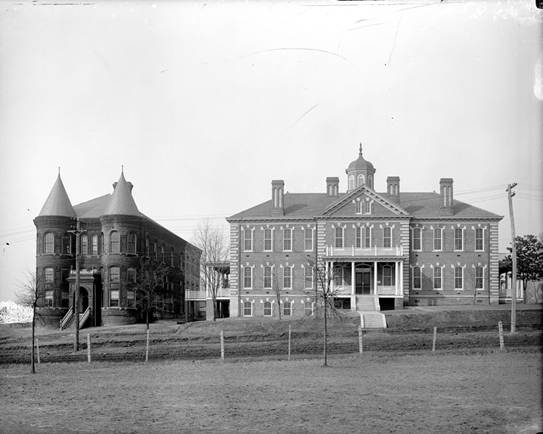
Leonard Medical School, America’s first 4-year Medical School
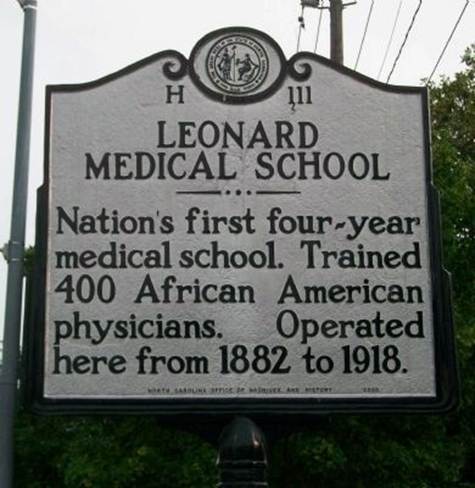
By 1886, Leonard had quietly accomplished something no other American medical school Black or white had managed: a full, graded, four-year program. Most medical schools at the time required only two years of lectures, often repeated word-for-word in the second year. Leonard set a higher bar, and the rest of American medicine eventually followed.
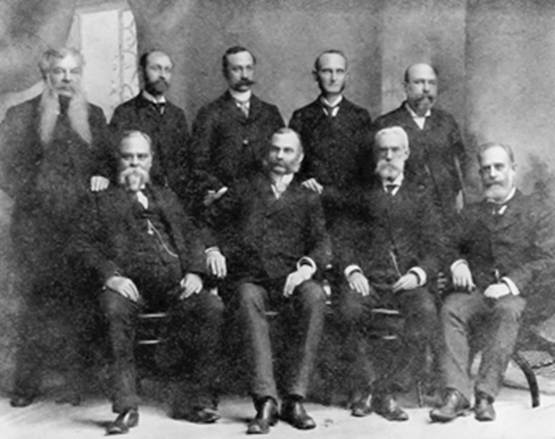
Faculty of Leonard Medical School, ca. 1902.
The First Class: Six Men Who Made History
On March 31, 1886, Leonard Medical School graduated its first class — six men, every one of whom passed the state licensing board examination. Two were North Carolinians; the others came from Georgia, South Carolina, Virginia, and West Virginia. Class valedictorian Lawson Andrew Scruggs, born to enslaved parents in Bedford County, Virginia, would go on to become one of the first three board-certified Black physicians in North Carolina history. He served as resident physician at Leonard Hospital and later founded the Old North State Medical Society, the nation’s oldest professional association of Black physicians.
Among his classmates were Manassa Thomas Pope, who became a prominent Raleigh physician and ran for mayor in 1919, and J.T. Williams, who practiced in Charlotte, served twice on its Board of Aldermen, and was eventually appointed by President William McKinley as U.S. Ambassador to Sierra Leone, serving from 1898 to 1907. A middle school in Charlotte still bears his name.
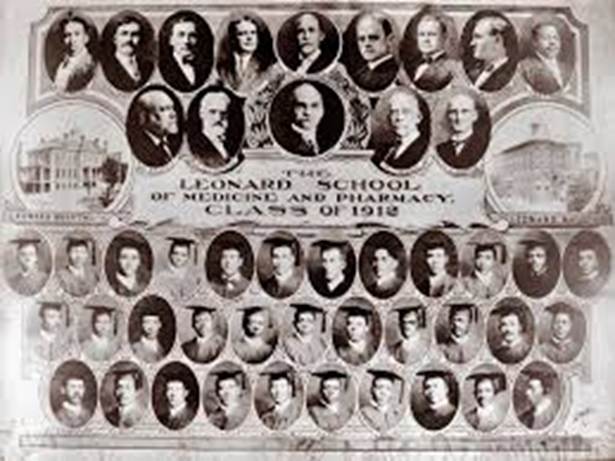
The Instructors: An Unlikely Faculty
Leonard’s founding faculty consisted of just two men, both white Raleigh physicians. Dr. James McKee held the chair of physiology and medical principles and practice while continuing his own private practice across town. Dr. F.A. Spafford, already teaching classics at Shaw, took on the role of anatomy professor.
As enrollment grew, as many as 23 additional members of Raleigh’s white medical community served as part-time faculty across the school’s lifetime, a remarkable arrangement in the segregated post-Reconstruction South. Notable instructors included Kemp B. Battle Jr., son of the president of the University of North Carolina at Chapel Hill, and Wisconsin I. Royster, great-uncle of future Wall Street Journal editor Vermont C. Royster. Tuition was kept deliberately low, never more than $100 per year, roughly half what white medical schools charged and many students worked maintenance shifts in Leonard Hall itself to afford the rest.
Famous Graduates: From Raleigh to the World
If Leonard’s faculty was small, the legacy of its alumni was anything but. Perhaps the most celebrated graduate is Dr. Aaron McDuffie Moore, class of 1888. The son of free Black farmers in Columbus County, Moore completed Leonard’s four-year program in three years and ranked second among 46 candidates, 30 of them white, on the North Carolina medical board examination. He moved to Durham and became the city’s first Black physician.
Moore’s medical career was only the beginning. He co-founded the North Carolina Mutual Life Insurance Company in 1898, which grew into the largest Black-owned business in the United States. He persuaded tobacco baron Washington Duke to fund Lincoln Hospital, the first secular, freestanding hospital for African Americans in the state, instead of building a Confederate monument. He helped launch hundreds of Rosenwald schools for Black children across North Carolina, more than any other state in the nation. Today, Durham’s celebrated ‘Black Wall Street’ owes much of its existence to a Leonard graduate.
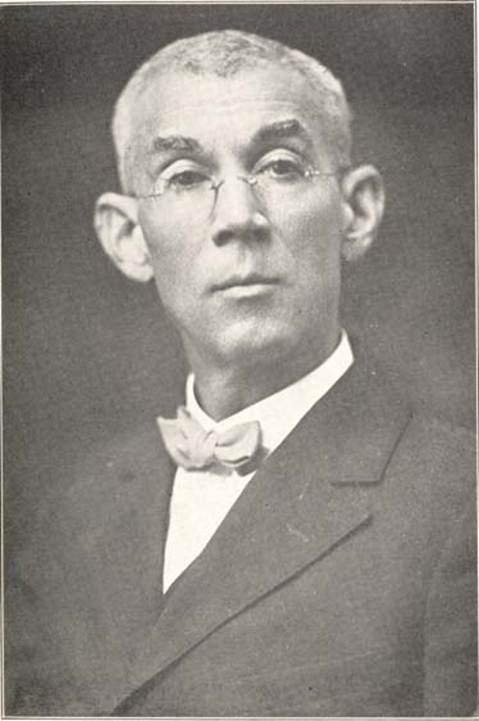
Dr. Aaron McDuffy Moore
Other notable alumni include Dr. Clinton Caldwell Boone (class of 1910), who served as a medical missionary in Liberia and the Belgian Congo, building schools, hospitals, and churches; Dr. John Walcott Kay (class of 1912), who co-founded the first hospital for African Americans in Wilmington, North Carolina; and Dr. George Louis Alphonso Pogue (class of 1911), who opened an integrated pharmacy in Bedford, Virginia, in 1912, a quietly radical act for the time.
The Closure: A Quiet, Devastating End
By the early 20th century, Leonard was struggling. Its endowment had always been modest, and most of its graduates served poor rural communities, leaving little capacity for alumni giving. Wealthier Black medical schools — Howard in Washington, D.C., and Meharry in Nashville — attracted the lion’s share of philanthropic dollars.
Then came the Flexner Report. Published in 1910 by Abraham Flexner under the Carnegie Foundation, the report was meant to standardize American medical education by tying schools to research universities and demanding modern laboratories, hospitals, and equipment. In theory, the goal was a uniform standard of care. In practice, the report was devastating for Black medical education. Flexner concluded that of the seven Black medical schools then operating, only two, Howard and Meharry, were ‘worth saving.’ Of Leonard, the report dismissively concluded the school ‘was in no position to make any contribution of value.’
Without resources to meet the new standards, Shaw’s trustees shortened Leonard’s curriculum to two years in 1914. The hospital closed that same year. The medical school held its final classes in 1918. By 1924, only Howard and Meharry remained among the nation’s Black medical schools, a loss the U.S. healthcare system has never fully recovered from.
The Legacy: Bricks, Bodies of Work, and a Building That Survived
In its 36 active years, Leonard Medical School graduated nearly 400 Black physicians — every one of whom passed state licensing examinations, an extraordinary record. They fanned out across the rural South, often as the only doctor for miles, delivering babies, treating tuberculosis, performing surgeries on kitchen tables, and quietly building a Black professional class that would help fuel the civil rights movement decades later.
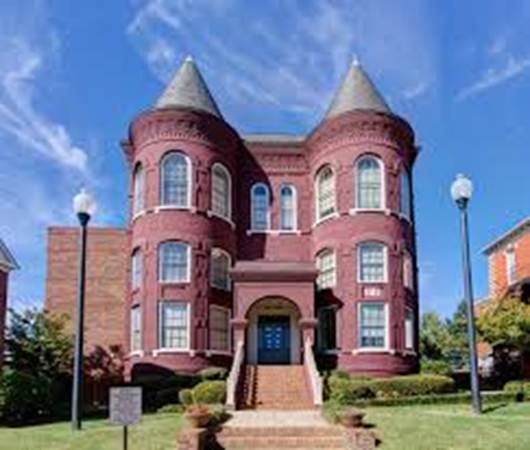
Leonard Hall itself nearly didn’t survive. After the medical school closed, the building was repurposed for general classrooms. A 1986 fire destroyed its roof and left it derelict for over a decade. Then, in 2000, a $3.6 million grant from the Historically Black Colleges and Universities Fund combined with corporate donations brought it back. Today, Leonard Hall is a North Carolina Historic Landmark, a contributing structure in the East Raleigh-South Park Historic District on the National Register of Historic Places, and once again a working building on Shaw’s campus.
In 2006, the North Carolina Highway Historical Marker Program installed a plaque at the site. The marker is small. The story is enormous.
Leonard Medical School was a brief experiment in defiance, a place where freedom, faith, and science met for a few extraordinary decades. Its graduates carried that mission into the homes of patients who had been told their lives didn’t matter, and proved otherwise. The building that housed them still stands. So does the question its closure raises: how many lives were lost, and how much potential was stifled, when American medicine decided it could afford to lose schools like Leonard?


Leave a Reply