The NASA Physicist Who Helped Us See the Earth — and the Future — Differently
February 8, 1943 – Present | Baltimore, Maryland
✦ ✦ ✦
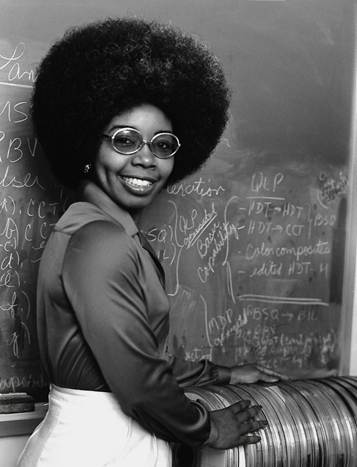
In the broad arc of American science history, there are names that shine so brightly they illuminate paths for everyone who follows. Valerie Thomas is one of those names. A physicist, data scientist, inventor, and tireless mentor, Thomas spent more than three decades at NASA breaking barriers most people never even knew existed and emerging on the other side with a legacy that touches everything from satellite imagery to modern 3D technology. Her story is one of quiet determination, extraordinary intellect, and an unshakeable belief that curiosity should never be discouraged — no matter who you are or where you come from.
✦ ✦ ✦
A Curious Mind in a World That Said “Not for You”
Valerie LaVerne Thomas was born on February 8, 1943, in Baltimore, Maryland, and raised in the Cherry Hill community, a historically Black neighborhood whose tight-knit spirit would shape her character for life. From her earliest years, she was drawn to the inner workings of things. At around age eight, she borrowed a library book called The Boy’s First Book on Electronics, hoping her father, who loved to tinker with radios and television sets, would help her explore its projects. He didn’t. That quiet dismissal could have been discouraging. For young Valerie, it only deepened her resolve.
The world of mid-20th century America was stacked against her in nearly every direction. As a young Black girl growing up in a racially segregated society, Valerie faced compounded disadvantages: systemic racism that limited educational access for African Americans, and a deeply entrenched cultural assumption that science, mathematics, and technology were simply not “for” girls. Her all-girls high school, Western High School itself only recently integrated under police protection in 1954 did not particularly encourage girls to pursue advanced science or mathematics coursework. Nobody pushed her toward the STEM classes she would have excelled in. The message, unspoken but unmistakable, was: this path is not yours.
She walked it anyway.
“She attended Morgan State University as one of only two women majoring in physics — and graduated with highest honors.”
Building a Foundation: Education at Morgan State University
After graduating high school in the early 1960s, Valerie Thomas enrolled at Morgan State University in Baltimore, Maryland, a Historically Black College and University (HBCU) with a proud tradition of academic excellence and a faculty deeply committed to nurturing Black scholars. It was here, finally, that Thomas found her intellectual home.
She declared physics as her major at a time when the field was almost entirely male and almost entirely white. She was one of only two women in her physics program. Rather than shrinking under the pressure of that isolation, Thomas thrived. The department’s renowned physics chair, Dr. Julius Henry Taylor, was among those who recognized her ability and pushed her to grow. In one famous anecdote, he reportedly taught her trigonometry in about twenty minutes and it stuck.
Thomas excelled across her mathematics and science coursework. In 1964, she graduated from Morgan State University with a degree in physics and with highest honors, a remarkable achievement by any measure, but especially striking given the barriers she had navigated to reach that podium.
Her education did not stop there. Thomas was a lifelong learner in the truest sense. During her career at NASA, she earned a Master’s Degree in Engineering Administration from George Washington University in 1985. And in 2004, long after her retirement, she completed a Doctor of Education (Ed.D.) in Educational Leadership and Education Technology at the University of Delaware, under the guidance of Professor Fred T. Hofstetter. From physics to engineering to education, her intellectual curiosity never ran dry.
✦ ✦ ✦
Finding Her Way to NASA — One Week After Graduation
The speed of what happened next is almost astonishing: Valerie Thomas was hired by NASA’s Goddard Space Flight Center (GSFC) in Greenbelt, Maryland as a mathematician and data analyst just one week after graduating from Morgan State. The year was 1964, the same year the Civil Rights Act was signed into law and Thomas stepped into a federal scientific institution as one of very few Black women in a professional technical role.
There was only one problem: she had never seen a computer before in her life. They existed, for her, only in science fiction films.
That did not stop her. “Since my job involved writing computer programs, I decided to learn as much as possible about computers,” she recalled decades later. And she did exactly that, attending graduate seminars, taking every training opportunity available, and immersing herself in the hardware and mathematics underlying early computer systems. At a time when computer programming required fluency in multiple number systems, binary, octal, decimal, hexadecimal and a strong foundation in abstract algebra, Thomas mastered it all with remarkable swiftness.
Her first major project was developing “Quick Look Processors”, real-time computer programs that allowed scientists to access data from the Orbiting Geophysical Observatory (OGO) satellites, which studied the space environment including gamma and ultraviolet radiation. It was painstaking, pioneering work in an era when the entire discipline of satellite data processing was being invented from the ground up. Thomas was not following a playbook, and she was writing it.
✦ ✦ ✦
Navigating Racism and Sexism at NASA
To speak about Valerie Thomas’s career without acknowledging the environment in which she worked would be to tell only half the story. NASA in the 1960s and beyond was not a meritocracy untouched by the prejudices of its era. It was an institution embedded in American society — and American society carried the full weight of racial and gender discrimination into its hallways, conference rooms, and laboratories.
Thomas was a Black woman in a world of white men. She faced the persistent double burden of racial bias and gender discrimination that affected every aspect of professional life from access to mentorship and advancement opportunities to the daily, grinding indignity of having your competence questioned, your presence treated as unusual, or your contributions overlooked. The fact that she not only survived in that environment but rose to positions of genuine leadership and national recognition speaks to extraordinary character and resilience.
She was not alone. NASA was also home to other pioneering Black women scientists and mathematicians, the “Hidden Figures” whose contributions were not widely celebrated during their careers. Thomas was part of that generation of trailblazers who did the work, excelled, and quietly opened doors for those who would follow. She received NASA’s Equal Opportunity Medal an award that itself speaks to the significance of her efforts not just as a scientist, but as a symbol of what was possible for people who looked like her.
Thomas channeled her experiences not into bitterness, but into action. Throughout her career, she made hundreds of visits to schools and universities, speaking to students from elementary age through college. She served as a mentor, a science fair judge, and a visible, living proof that Black women belonged in STEM — not someday, not conditionally, but right now.
“She made literally hundreds of visits to schools and national meetings over the years… an exceptional role model for potential young Black engineers and scientists.”
✦ ✦ ✦
Shaping the Future: The Landsat Program and Beyond
In 1970, Thomas took on one of the defining challenges of her career: managing the development of image-processing systems for NASA’s Landsat program. Landsat was the first satellite to send multi-spectral images of Earth’s surface back to scientists, opening an entirely new window onto our planet’s resources, agriculture, geography, and environmental changes. It remains the longest-running program for acquiring satellite imagery of Earth.
Thomas became an internationally recognized expert in Landsat digital products, helping develop the computer software that transformed raw satellite data into images scientists worldwide could interpret and use. In 1974, she headed a team of approximately 50 people for the Large Area Crop Inventory Experiment (LACIE), a landmark joint effort with NASA’s Johnson Space Center, the National Oceanic and Atmospheric Administration (NOAA), and the U.S. Department of Agriculture. LACIE demonstrated for the very first time that satellite imagery could be used to predict wheat yields on a global scale, a breakthrough with profound implications for food security and international agriculture.
Her work during this period placed her among the foundational figures of remote sensing science. She was not a person standing on the sidelines of history. She was building its infrastructure.
✦ ✦ ✦
The Invention That Changed How We See the World
In 1976, Thomas attended a science exhibition where she witnessed something that stopped her in her tracks: an illusion of a light bulb that appeared to glow brightly even after it had been unscrewed and removed from the lamp. The illusion was created using a second bulb beneath the socket and a concave mirror to project an image that appeared to exist in the space in front of the mirror rather than behind it.
Thomas was captivated. She began researching and experimenting, studying how concave mirrors could be used to project three-dimensional images that appeared real to the naked eye without any special glasses or equipment. After years of meticulous work, she filed for a patent on her invention: the Illusion Transmitter.
On October 21, 1980, the United States Patent Office granted Valerie Thomas Patent No. 4,229,761 for the Illusion Transmitter, an optical device capable of transmitting three-dimensional images that appear to occupy real space. At the time, only a tiny fraction of U.S. patents were held by Black inventors. Even fewer were held by Black women. Thomas had just joined that extraordinarily rare group.
NASA adopted the technology, and its applications have since expanded dramatically from surgical imaging and medical tools to the 3D display technologies that underpin modern screens, televisions, and cinematic experiences. The next time you watch a 3D film, or see a holographic display in a science museum, you are seeing the downstream legacy of Valerie Thomas’s curiosity at a science fair in 1976.
✦ ✦ ✦
A Career of Leadership and Legacy
Thomas continued to rise through NASA’s ranks after her invention. She served as NSSDC Computer Facility Manager, overseeing a major consolidation and technological upgrade of two previously independent computer facilities in 1985. From 1986 to 1990, she managed the Space Physics Analysis Network (SPAN) as it grew from roughly 100 computer nodes to over 2,700 nodes connecting scientists worldwide; work that made SPAN a foundational part of what would become the modern internet.
She contributed to research on Halley’s Comet, ozone layer monitoring, the Voyager spacecraft, and satellite technology. She was also Technical Officer for a $42 million multi-year technical support contract and helped build the Minority University-Space Interdisciplinary Network, connecting students at minority-serving institutions directly with NASA scientists.
By the time she retired in August 1995, Thomas held the titles of Associate Chief of NASA’s Space Science Data Operations Office, Manager of the NASA Automated Systems Incident Response Capability, and Chair of the Space Science Data Operations Office Education Committee. She had earned NASA’s highest institutional honor from Goddard Space Flight Center: the GSFC Award of Merit.
✦ ✦ ✦
Life After NASA: Still Teaching, Still Inspiring
Retirement, for Valerie Thomas, was never a retreat. It was simply a new stage from which to keep giving. After leaving NASA in 1995, she continued her academic work, earning her doctoral degree in Educational Leadership from the University of Delaware in 2004 — proof, if any were needed, that her love of learning was never about credentials alone.
She served as an associate at the UMBC Center for Multicore Hybrid Productivity Research, continuing to engage with the cutting edge of computing. She remained deeply involved in mentoring young people through organizations including Science Mathematics Aerospace Research and Technology, Inc. (SMART), the National Technical Association (NTA), and Women in Science and Engineering (WISE), organizations whose explicit mission is to encourage minority and female students to enter scientific and technological careers.
She also became president of her regional chapter of Shades of Blue, an organization dedicated to promoting aviation and aerospace careers for young students. She worked as a substitute teacher. She spoke at schools, universities, and conferences. She showed up again and again as living proof that the door was open.
In 2018, Thomas was inducted into the National Inventors Hall of Fame, joining the ranks of history’s most consequential innovators. That same year, the broader public began to rediscover her story. In 2021, hip-hop artist Chance the Rapper posted about Thomas to his more than eight million Twitter followers, introducing her name and her scientific contributions to an entirely new generation.
“She describes herself as a ‘lifetime learner’ — and her entire life has proven it.”
✦ ✦ ✦
Why Valerie Thomas Matters Today
In a world that is still working imperfectly, persistently to close the gaps in representation in science and technology, Valerie Thomas is not just an inspiring historical figure. She is an active argument. Her life demonstrates that talent does not distribute itself according to race or gender, and that when institutions create barriers, they don’t just harm individuals; they deprive the world of discoveries it desperately needs.
The Illusion Transmitter. The Landsat data systems. The crop inventory experiments. The global scientific network. The hundreds of students mentored. These are not small contributions. They are the work of a woman who was told, at every turn, that she didn’t belong and who showed up anyway, did the work, and changed the world.
Valerie Thomas was born into a country that had built walls around her future. She spent her life quietly, methodically, brilliantly dismantling them. And she made sure to leave the door open for everyone who came after her.
✦ ✦ ✦
Key Milestones at a Glance
Born: February 8, 1943, Baltimore, Maryland
Education: B.S. in Physics (Highest Honors), Morgan State University, 1964 | M.S. in Engineering Administration, George Washington University, 1985 | Ed.D. in Educational Leadership, University of Delaware, 2004
NASA Career: 1964–1995, Goddard Space Flight Center, Greenbelt, Maryland
Invention: U.S. Patent No. 4,229,761 — Illusion Transmitter, granted October 21, 1980
Key Awards: GSFC Award of Merit (NASA’s highest Goddard honor) | NASA Equal Opportunity Medal
Inducted: National Inventors Hall of Fame, 2018
✦ ✦ ✦
Inspired by this story? Share it.
 Unbedside Manners
Leave a comment