Notable Bodybuilder Deaths (2021–2025): Causes, Circumstances, and the PED Question
Published February 2026 • Health & Fitness Investigation
In the past five years, the bodybuilding world has been shaken by a sobering wave of deaths — many of them sudden, many of them involving individuals who were, by outward appearances, at the peak of physical development. Several of these men and women had amassed millions of followers on Instagram, YouTube, and TikTok, sharing workout routines, nutrition advice, and aspirational physiques to audiences that included countless young people. Their deaths have reignited a long-standing and deeply uncomfortable conversation: what price, in human life, does elite bodybuilding exact?
This article examines five of the most prominent cases from 2021–2024. It does not seek to condemn or speculate recklessly. Rather, it presents the known facts, the medical context, and the broader patterns that researchers, physicians, and the bodybuilding community itself have been grappling with for years. The use of anabolic steroids and other performance-enhancing drugs (PEDs) is a documented reality at the professional level of this sport. Whether these substances contributed to individual deaths is often difficult to prove — but impossible to ignore.
CASE 01 — Shawn Rhoden
Shawn Rhoden
Former Mr. Olympia Champion · “Flexatron”
| Age at Death 46 | Date of Death Nov. 6, 2021 | Cause of Death Heart Attack | Social Media Millions of followers |
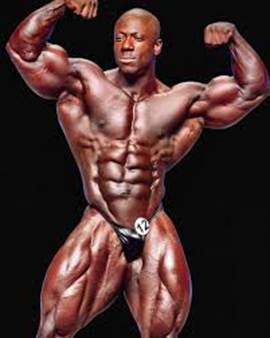
Shawn Rhoden
Shawn Rhoden was not merely a successful competitive bodybuilder — he was one of the sport’s all-time greats. In 2018, at the age of 43, he dethroned seven-time Mr. Olympia champion Phil Heath to claim bodybuilding’s most prestigious title, becoming the oldest person ever to do so. His nickname “Flexatron” spoke to his exceptional muscle conditioning and posing artistry, and he was widely admired for representing a more aesthetic, shape-focused physique in an era increasingly dominated by raw mass. He maintained an active social media presence with millions of followers across platforms and was the subject of a documentary chronicling his historic Olympia victory.
Rhoden’s death on November 6, 2021 sent immediate shockwaves through the fitness world. Reports confirmed he suffered a fatal heart attack. He was 46. His passing was one of several high-profile bodybuilder deaths within a short period, following that of fellow pro George Peterson just weeks earlier.
The circumstances of Rhoden’s final years were complicated. After winning the Olympia in 2018, he was banned from competition amid serious sexual assault allegations. While many colleagues defended him as a person, the legal cloud and the forced absence from competition reportedly took a severe psychological and physical toll. His friend and fellow competitor Sergio Oliva Jr. addressed Rhoden’s death directly, stating that Rhoden was not actively competing or taking the heavy substance loads associated with competition prep at the time of his death. Oliva argued it was the sport itself, the stress, the heartbreak of being unable to compete — that had broken him.
Still, years of documented PED use by elite bodybuilders, a near-universal reality at that level of competition, are understood by cardiologists to carry compounding cardiovascular risks that do not disappear when drug use stops. Anabolic steroids are associated with left ventricular hypertrophy, arterial stiffness, and adverse lipid profiles, all of which significantly elevate long-term heart attack risk even in former users.
| PED CONNECTION — ASSESSMENT Likely indirect and cumulative. Rhoden was not believed to be in active heavy preparation at the time of death. However, decades of professional-level bodybuilding — with the associated PED use that entails — almost certainly contributed to underlying cardiovascular deterioration. No autopsy findings definitively linking steroids to his death were made public. |
CASE 02 — Cedric McMillan
Cedric McMillan
IFBB Pro & 2017 Arnold Classic Champion · “The One”
| Age at Death 44 | Date of Death Apr. 12, 2022 | Cause of Death Heart Attack | Social Media Hundreds of thousands |
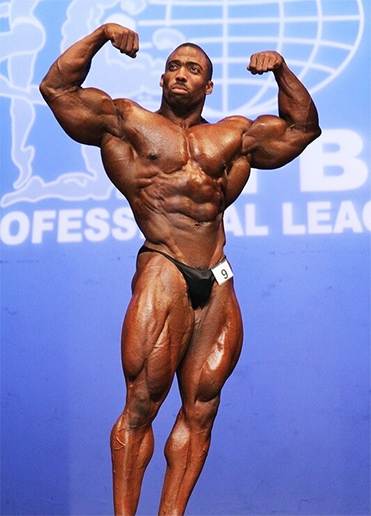
Cedrick McMillan
Cedric McMillan was a figure who transcended competitive bodybuilding. Known for his imposing 6’1” frame, his charismatic personality, and his devoted service as a U.S. Army instructor at Fort Jackson, South Carolina, McMillan was beloved far beyond the confines of the competition stage. He was the 2017 Arnold Classic champion — a win that earned him a famous embrace from his childhood idol Arnold Schwarzenegger — and had been praised by Schwarzenegger himself as an example of what modern bodybuilders should aspire to look like. His social media presence was substantial, and his documentary appearances and online interviews had earned him a following extending well beyond hardcore bodybuilding circles.
What made McMillan’s death particularly striking was the very public struggle that preceded it. In late 2021, he openly discussed a near-death experience stemming from COVID-19 complications. He had contracted the virus in 2020 and subsequently developed severe pneumonia. During hospitalization, physicians discovered his heart was functioning at only ten percent of normal capacity. He was placed on life support with a breathing machine. He described the experience in candid detail in interviews, saying he had ignored doctors’ advice and returned to training while still seriously ill, driven by his love of competition.
McMillan had a documented history of high blood pressure and high cholesterol — conditions prevalent in bodybuilding and exacerbated by long-term anabolic steroid use. He openly acknowledged his use of performance-enhancing substances during his career. He died on April 12, 2022, while on a treadmill. He was 44 years old and is survived by his wife and four children.
His case illustrates a grim convergence of risk factors: years of cardiovascular strain from extreme mass building, documented prior cardiac compromise from illness, high blood pressure, high cholesterol, and the cumulative effects of long-term PED use. McMillan himself had warned others publicly: “Give yourself to your family and the people who love you while you still have a chance.” The words were prophetic.
| PED CONNECTION — ASSESSMENT Substantial circumstantial evidence. McMillan admitted steroid use, had documented cardiovascular conditions consistent with long-term PED use (hypertension, elevated cholesterol, left ventricular dysfunction), suffered a COVID-related cardiac event, and then died of a heart attack. Steroids cannot be ruled out as a contributing factor in his underlying heart disease, even if the immediate trigger was exercise-induced cardiac arrest. |
CASE 03 — Jo Lindner
Jo Lindner
German Bodybuilder & Social Media Star · “Joesthetics”
| Age at Death 30 | Date of Death Jun. 30, 2023 | Cause of Death Aneurysm | Social Media 8+ million followers |
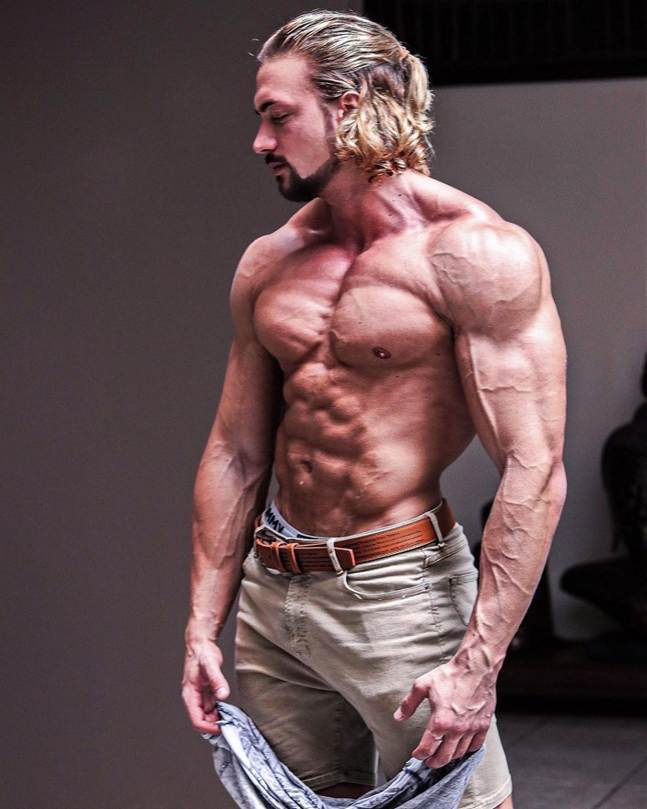
Jo Lindner
Johannes “Jo” Lindner — known to his enormous online following as “Joesthetics” — was perhaps the most globally followed bodybuilder of his generation at the time of his death. Born in Germany on January 14, 1993, Lindner had accumulated over eight million followers across Instagram and YouTube through a combination of elite physique presentation, genuine charisma, and an unusual trademark: his ability to ripple his pectoral muscles in a wave-like motion, which he dubbed “alien gains.” Viral videos of this ability turned him into an international internet phenomenon, and his fitness content reached well beyond the bodybuilding community into mainstream pop culture.
On June 30, 2023, Jo Lindner died suddenly at his home in Bangkok, Thailand. He was 30 years old. His girlfriend and close friends confirmed his passing. He had suffered an aneurysm. The only prior warning sign, as reported by those around him, was a headache he had mentioned in the days before his death. He had been planning to film content that very afternoon.
An aneurysm — the rupture of a weakened blood vessel wall — at age 30 in an otherwise apparently healthy individual is extraordinarily rare in the general population. In bodybuilders who have used anabolic steroids and growth hormone, however, vascular abnormalities are a well-documented medical concern. Steroids are associated with elevated blood pressure, arterial wall thickening, and changes in vascular compliance — all of which increase the risk of aneurysm formation and rupture. Lindner had spoken openly about PED use in various interviews, though he was candid about both the appeal and the risks of the bodybuilding lifestyle.
His death struck the online fitness community with particular force because of the sheer scale of his reach. Millions of young men and women who aspired to his physique were suddenly confronted with the reality that the body they admired had given out at thirty. Tributes poured in from across the globe.
| PED CONNECTION — ASSESSMENT Significant concern. An aneurysm at age 30 in a professional bodybuilder is medically unusual and raises legitimate questions about vascular health compromised by long-term steroid and PED use. No formal autopsy report publicly linking substances to the aneurysm was released. The possibility cannot be dismissed, however, given the well-established vascular risks of anabolic androgenic steroid (AAS) use and growth hormone. |
CASE 04 — Neil Currey
Neil Currey
IFBB Pro & Mr. Olympia Qualifier · New York Pro Champion
| Age at Death 34 | Date of Death September 2023 | Cause of Death Drug Toxicity | Social Media Active competitive following |
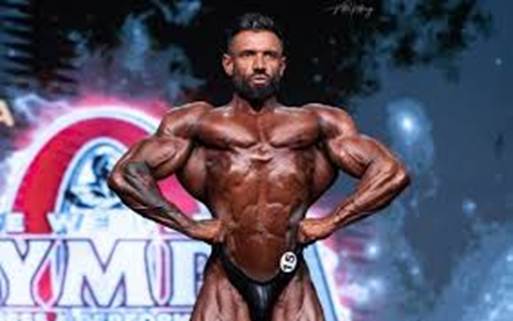
Neil Currey
Neil Currey’s story is one of the most complex and heartbreaking in recent bodybuilding history. A British bodybuilder who entered the sport after leaving the army, Currey had worked his way through the competitive ranks with dedication and consistency. His career milestone came when he won the New York Pro and qualified for the Mr. Olympia, a lifelong dream. Those who knew him described him as cheerful, motivated, and passionate. Former coach Milos Sarcev — a bodybuilding legend — described the joy Currey had shown upon qualifying for the Olympia stage.
Currey was found dead in his apartment in Sheffield, England, in September 2023. He was 34. The inquest that followed produced findings that shocked the bodybuilding world: Sheffield’s Medico-Legal Centre determined that Currey died from a lethal combination of cocaine and another controlled substance. His parents, in a deeply personal statement following the inquest, disclosed that their son had used anabolic steroids throughout his competitive career and that they believed the long-term psychological effects of PED use had played a significant role in his deterioration. They stated that the drugs had left him “very isolated and depressed.”
This is a dimension of PED use that receives far less attention than the cardiovascular risks: the documented psychological consequences. Research has established that anabolic steroids can cause mood dysregulation, aggression, depression, and dependency. Whether the substance abuse that ultimately killed Currey was a product of the same psychological unraveling connected to steroid use — or a separate, parallel struggle — cannot be determined with certainty. But the pattern is one that medical researchers have increasingly flagged as a serious concern.
| PED CONNECTION — ASSESSMENT Documented and acknowledged by his own family. While the immediate cause of death was toxicity from non-anabolic substances, Currey’s parents directly connected his psychological deterioration to long-term steroid use. The mental health dimension of PED use — depression, isolation, and susceptibility to substance abuse — is an underreported consequence that this case places in stark relief. |
CASE 05 — Jaxon Tippet
Jaxon Tippet
Australian Fitness Influencer & Anti-Steroid Advocate
| Age at Death 30 | Date of Death November 2024 | Cause of Death Heart Attack (reported) | Social Media ~250,000 followers |
Perhaps no case in recent memory is more ironic or more instructive than that of Jaxon Tippet. The 30-year-old Australian fitness influencer had built his following of nearly 250,000 across Instagram and TikTok not merely by showcasing his physique, but by speaking openly and candidly about his past addiction to anabolic steroids and the damage they had done to his body. He had used steroids for five years and had stopped. He spoke publicly about his recovery, describing how his health had deteriorated during use: the yellowing of his skin, chronic fatigue, and other serious symptoms. His stated mission was to warn others.
In November 2024, Tippet was found dead in a hotel room in Turkey. He was traveling at the time. A fellow fitness creator reported that Tippet had suffered a heart attack. He was 30 years old. No official determination definitively linking his past steroid use to his death was made public in the immediate reporting.
Tippet’s case carries a particular weight: here was a man who had experienced the harm of steroids firsthand, quit, dedicated his platform to warning others, and still died at thirty possibly from the long-tail damage those substances had caused years earlier. Medical research supports the concern that cardiovascular damage from anabolic steroid use can persist long after cessation, including left ventricular dysfunction and arterial changes that increase heart attack risk in younger former users.
| PED CONNECTION — ASSESSMENT Unknown but plausible. Tippet had stopped steroid use years before his death. However, his own documented health deterioration during use — and the established medical evidence that vascular and cardiac damage from AAS can be long-lasting or permanent — make prior steroid use a legitimate consideration in any assessment of his death, even absent a confirmed causal link. |
The Bigger Picture: A Pattern That Cannot Be Ignored
The deaths described above are not isolated incidents. According to data compiled by medical researchers and reported by the National Library of Medicine, more than two dozen professional bodybuilders died unexpectedly in 2021, with similarly elevated mortality rates continuing into 2022 and 2023. The sport has lost dozens of relatively young athletes — many in their thirties and forties — to cardiac events, aneurysms, and other conditions that are exceptionally rare in the general population at those ages.
| “The deaths received much attention in the bodybuilding world but relatively little in the medical community.” — National Library of Medicine |
What the Medical Research Tells Us
Anabolic-androgenic steroids (AAS) are synthetic derivatives of testosterone. Their cardiovascular consequences are well-documented in peer-reviewed literature. Long-term use is associated with left ventricular hypertrophy (the thickening of the heart’s main pumping chamber), reduced diastolic function, accelerated atherosclerosis, increased LDL cholesterol, decreased HDL cholesterol, elevated blood pressure, and changes in the heart’s electrical conduction system that can trigger arrhythmias. Each of these factors independently elevates heart attack and stroke risk. Together, they create a compounding hazard that can remain in place years after drug use has ended.
Human growth hormone (HGH), insulin, diuretics, and other PEDs commonly used in competitive bodybuilding carry their own independent risks — including organomegaly (enlargement of internal organs), renal stress, and electrolyte imbalances that can precipitate fatal cardiac arrhythmias during competition prep, when bodybuilders are often severely dehydrated.
The Social Media Dimension
The deaths chronicled in this article are not simply tragedies for the individuals and families involved. They carry a broader public health dimension because of the enormous platforms these athletes held. Bodybuilders like Jo Lindner were reaching audiences of millions, predominantly young men, who saw their physiques as aspirational. Research on social media and body image has consistently found that exposure to highly muscular male physiques on platforms like Instagram is associated with increased rates of muscle dysmorphia, disordered eating, and initiation of anabolic steroid use among young male followers.
The reality, obscured by the polished aesthetics of fitness content, is that many of these physiques are chemically engineered and that the chemicals involved carry risks their users may not fully appreciate until the damage has already been done. When an influencer dies at thirty of a heart attack, millions of followers are confronted with a truth the curated feed had never shown them.
The Industry’s Structural Problem
Unlike other professional sports, elite competitive bodybuilding operates largely without rigorous anti-doping enforcement or mandatory athlete health monitoring programs. Testing protocols are inconsistent, the culture of PED use is deeply embedded at the top levels of the sport, and there is no mandatory cardiac screening for competitors. The late Rich Piana — another prominent fitness influencer who died in 2017 — said plainly that if a person wants to become a professional bodybuilder, PED use is essentially unavoidable at the elite level. That statement reflects a structural reality of the sport that no amount of individual responsibility can fully offset.
A Reckoning Long Overdue
The deaths of Shawn Rhoden, Cedric McMillan, Jo Lindner, Neil Currey, Jaxon Tippet, and the many others who have not been named here demand more than grief. They demand a serious conversation — in the sport, in the fitness media, in the medical community, and on the social platforms that amplify these athletes’ images — about what elite bodybuilding costs.
For many of the athletes involved, PED use was not a reckless choice made in ignorance. It was a rational response to the competitive demands of a sport where the use of such substances is effectively prerequisite to success at the highest level. The tragedy is systemic as much as it is individual.
What is clear is that the human body — no matter how extraordinary — has limits that chemistry cannot indefinitely override. The men and women memorialized in this article built remarkable lives and inspired millions of people. They also paid an extraordinary price. The least their communities can do is look at that price honestly, and refuse to look away.
| Editorial Note This article presents reported facts, documented medical information, and publicly available accounts from family members, friends, and colleagues of the individuals discussed. Where direct causal connections between PED use and cause of death have not been confirmed by official medical or forensic findings, the language reflects that uncertainty. The purpose of this piece is informational. It is not intended to cast definitive blame on individuals or organizations, nor to substitute for medical advice. Anyone experiencing concern about anabolic steroid use or related health issues is encouraged to consult a qualified medical professional. |
 Unbedside Manners
Leave a comment