She was going to be a doctor Monday through Friday, a carpenter on Saturdays, and a gas station owner on Sundays — so she could wipe down drivers’ car windows. Even as a child, Valerae Lewis had big plans.
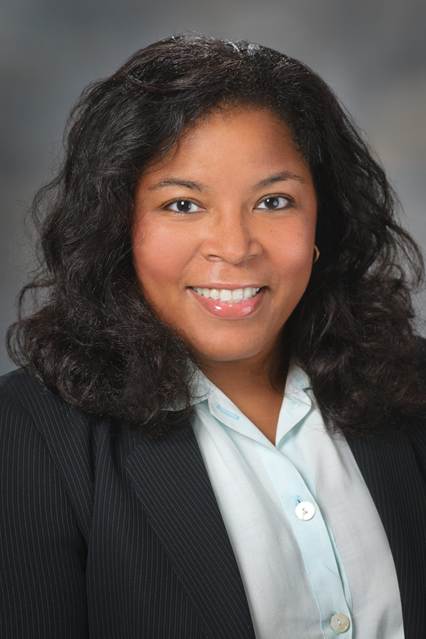
That childhood vision may have narrowed over the years, but the ambition behind it never did. Today, Dr. Valerae O. Lewis stands as one of the most accomplished surgeons in the United States — the first and only fellowship-trained Black woman orthopedic oncologist in the nation, and a trailblazer who has spent decades quietly shattering ceilings that were never supposed to shatter.
Roots and Early Life
Valerae Olive Lewis was born in 1966 in White Plains, New York, into a family that treated education as both a privilege and a responsibility. Her father, Carl Norman Lewis, was a physician with roots in Antigua who had built his career in internal medicine in Harlem. Her mother, Dorothe Williams Lewis, held a master’s degree in education. Growing up alongside two older sisters, Valerae absorbed the message early: excellence was expected, and the work was always worth it.
She spent time as a child working in her father’s doctor’s office — more in the way, she jokes, than actually helping — but those visits planted seeds. She loved math and science. She loved working with her hands. She loved the idea of fixing things. A medical career felt less like a choice and more like a calling.
Education: Yale, Harvard, and the Road to Mastery
Lewis earned her Bachelor of Science degree in psychobiology from Yale College in 1989, then went on to Harvard Medical School, where she earned her Doctor of Medicine in 1993 — with honors. She completed her internship at Beth Israel Hospital in New York City before embarking on the rigorous Harvard Combined Orthopedic Residency Program in Boston, one of the most competitive programs in the country.
It was at Harvard that Lewis found her specialty. Two of her mentors in medical school were orthopedic oncologists, and they made the field come alive for her. “No operation is ever the same,” she has said. “A tumor changes the anatomy of the body. You are always challenged.” She loved that. She completed her fellowship in musculoskeletal oncology at the University of Chicago in 1999, becoming the first and only fellowship-trained Black woman in the country to hold that distinction.
Facing Racism and Sexism Head-On
The path was not without its thorns. Orthopedic surgery remains one of the most homogenous fields in medicine — more than 94% male and 85% white, according to the American Academy of Orthopaedic Surgeons. For a Black woman, applying to residency programs was, in her own words, “a little daunting.”
During the application process, Lewis happened to read a recommendation letter written on her behalf by an orthopedic faculty member. Most of it was glowing but it was a telling moment, a reminder that she was always being evaluated against a backdrop of assumptions. Rather than letting that diminish her, she used it as fuel. “It just made me feel like I can do this,” she has recalled. “Like I am just as good as the rest of these boys out there.”
She has been candid about the fact that the obstacles faced by Black physicians in the 1920s and 1960s have not fully disappeared. As she rose through the ranks, she noticed something that many trailblazers notice: the higher you climb, the fewer people who look like you. That realization didn’t discourage her; it deepened her sense of mission.
A Career of Historic Firsts
In 2000, Dr. Lewis joined The University of Texas MD Anderson Cancer Center in Houston, one of the world’s leading cancer institutions. She rose steadily and purposefully. By 2002, she was directing the Musculoskeletal Oncology Fellowship Program. By 2008, she was Section Chief. In 2011, she launched the Multidisciplinary Pelvic Sarcoma Program, a pioneering initiative to improve outcomes for one of oncology’s most complex patient populations.
In 2012, she became the first African American woman to receive the MD Anderson Faculty Achievement Award in Patient Care. In 2014, she was named the inaugural chair of MD Anderson’s Department of Orthopedic Oncology — the first woman to chair an orthopedic department at a freestanding cancer center in the entire University of Texas system.
She holds the title of John Murray Professor of Orthopedic Oncology. She is the only Black woman chair of an orthopedics department in the country.
Her Mission Today
Dr. Lewis continues to lead MD Anderson’s Department of Orthopedic Oncology, performing complex surgeries — rotationplasties, hemipelvectomies, limb-salvage operations — that give patients, many of them children, their mobility and their lives back. One of the department’s mottos says it all: We keep kids running.
But her influence extends far beyond the operating room. She mentors the next generation with intention, knowing firsthand how much a single encouraging word or open door can mean. “As you get higher and higher in the administrative echelon,” she has said, “you realize there are fewer and fewer people who look like you. And that makes it all the more important to bring more people up with you.”
A Legacy Still Being Written
Dr. Valerae O. Lewis did not become extraordinary by accident. She became extraordinary through a combination of brilliance, grit, and an unshakeable belief that she belonged in every room she walked into — even when the room didn’t believe it yet. Her story is not just one of personal triumph. It is a blueprint for what becomes possible when talent is met with perseverance, and when barriers are treated not as walls, but as doors waiting to be opened.
The field of medicine is better — patients are better — because she refused to take no for an answer.
 Unbedside Manners
Leave a comment