A daughter of Harvard, a pioneer of microbiology, and a barrier-breaking veterinarian — Jane Hinton’s life story is one of quiet brilliance and enduring impact.
Roots of Greatness: Early Life and Family
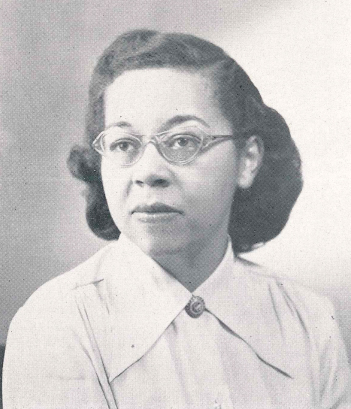
Jane Hinton was born on May 1, 1919, in Canton, Massachusetts, into a household where intellectual excellence was simply the family tradition. Her mother, Ada (Hawes) Hinton, was a former teacher and social worker, and her father, William Augustus Hinton, was one of the most distinguished African American scientists of the twentieth century. Growing up in such an environment, it was all but inevitable that Jane would carve her own remarkable path through the sciences.
Education was a serious priority in the Hinton household and not without reason. Knowing that racial barriers in the United States could limit their daughters’ opportunities, William and Ada made the bold decision to send Jane and her sister to school across several countries in Europe when Jane was just six years old. The girls received a broad, rigorous education abroad before returning to the United States in 1928. Jane completed her secondary education at Montpelier Seminary in Vermont, graduating in 1935, and went on to earn her bachelor’s degree from Simmons College in Boston in 1939.
Her Father’s Shadow and Legacy
To understand Jane Hinton, you must first understand her father. William Augustus Hinton (1883–1959) was a bacteriologist and pathologist whose parents had been enslaved, a fact that makes his achievements all the more extraordinary. Faced with widespread racism in Boston’s medical establishment, he channeled his ambitions into laboratory medicine and rose to become one of the field’s foremost authorities. In the 1920s, he developed the “Hinton Test,” a blood serology test for syphilis that was widely used across the United States until more advanced methods superseded it after World War II.

William Augustus Hinton
William Hinton’s firsts were staggering: he became the first African American to teach at Harvard Medical School and the first African American author to publish a medical textbook. In 1931, he also created a course on medical laboratory techniques that was notably open to women, a forward-thinking move that helped shape the next generation of laboratory scientists, including his own daughter. Jane would go on to work directly in her father’s Harvard laboratory after college, where a world-changing discovery awaited her.
The Mueller-Hinton Agar: A Tool That Transformed Medicine
After graduating from Simmons College, Jane joined Harvard University’s Department of Bacteriology and Immunology as an assistant to microbiologist Dr. John Howard Mueller. Together, in 1941, they published a landmark paper and introduced what would become one of the most essential tools in modern microbiology: the Mueller-Hinton agar.
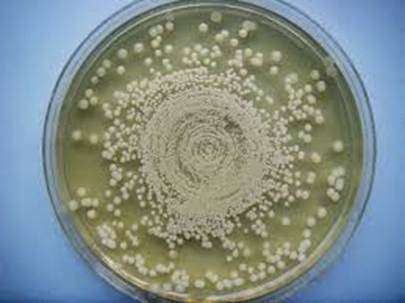
So what exactly is it? Agar is a gel-like medium derived from seaweed used in laboratories to grow and study microorganisms. The Mueller-Hinton agar is a specially formulated version designed to cultivate a wide range of bacteria in a non-selective, non-differential environment, meaning it encourages the growth of many species without distinguishing between them. Mueller and Hinton discovered that incorporating starch into the agar served a critical dual purpose: it boosted bacterial growth while simultaneously absorbing bacterial toxins that would otherwise interfere with antibiotic testing. This made the medium remarkably clean and reliable.
Originally developed to isolate Neisseria bacteria, the pathogens responsible for meningococcal meningitis and gonorrhea, the Mueller-Hinton agar proved far more versatile than its creators may have anticipated. Its loose, permeable consistency allows antibiotics to diffuse evenly through the medium, which turned out to be ideal for antibiotic susceptibility testing. By the 1960s, it had become the go-to substrate for the Kirby-Bauer disk diffusion method, a test in which antibiotic-saturated paper disks are placed on a bacteria-covered plate to determine whether a drug can inhibit bacterial growth. The Clinical and Laboratory Standards Institute ultimately adopted the Kirby-Bauer technique on Mueller-Hinton agar as the global gold standard for antibiotic resistance testing, a designation it still holds today.
In an era when antibiotic resistance threatens to undo decades of medical progress, the Mueller-Hinton agar is more relevant than ever. Laboratories worldwide still reach for this medium whenever they need to know whether a bacterium can be stopped by a given antibiotic, a question at the very heart of treating infections.
War, Veterinary Medicine, and Another Barrier Broken
When World War II erupted, Jane Hinton took her skills directly into the war effort. From 1942 to 1945, she worked as a medical technician with the U.S. War Department in Arizona, serving in the laboratory of Dr. Hildrus Augustus Poindexter, whose team’s work combating malaria and tropical diseases in the Pacific earned Poindexter a Bronze Star. Hinton’s own contributions to this critical public health work, though less formally decorated, were no less real.
After the war, Hinton charted a new course. She enrolled in the School of Veterinary Medicine at the University of Pennsylvania, a daunting environment in which fewer than five African Americans had ever graduated before her. She threw herself into student life, serving as both class historian and class secretary, and earned her Doctor of Veterinary Medicine (VMD) in 1949. That same year, Alfreda Johnson Webb earned her VMD from Tuskegee University. The two women made history together as the first African American women to become doctors of veterinary medicine in the United States, and the first African American members of the Women’s Veterinary Medicine Association.
A Life Well Lived: Career, Legacy, and Quiet Retirement
Returning to her hometown of Canton, Massachusetts, Hinton practiced as a small animal veterinarian until 1955, before transitioning to a role as a federal government inspector with the U.S. Department of Agriculture in Framingham, where she focused on researching and responding to disease outbreaks in livestock. She retired around 1960, at just 41 years old, and spent her later years tending a garden and caring for an assortment of pets. She never married. Jane Hinton passed away on April 9, 2003, just weeks before what would have been her 84th birthday.
In 1984, the Minority Veterinary Students association at the University of Pennsylvania honored Hinton alongside John Taylor, the first African American graduate of the school’s veterinary program during the school’s centennial celebrations. It was a recognition long overdue.
Jane Hinton never sought the spotlight. Yet in two entirely different fields — microbiology and veterinary medicine — she left marks that have never faded. Every hospital laboratory that runs an antibiotic sensitivity test today is building on the work she did at Harvard more than eighty years ago. And every Black woman who enters veterinary school walks a path that Hinton helped pave.
 Unbedside Manners
Leave a comment