Introduction: More Than Meets the Eye
When most people hear “Melanotan 2,” they think of a tanning peptide. Some are aware it can enhance libido. But this understanding is like saying water is only for drinking—you’re missing everything else it does. Melanotan 2 (MT2) is actually a synthetic analog of alpha-melanocyte stimulating hormone (α-MSH), a regulatory neuropeptide signaling molecule that interfaces with one of the body’s most fundamental biological control systems: the melanocortin system.
What makes MT2 fascinating isn’t what it does to your skin. It’s what it does to the underlying biological architecture that separates health from disease. For biohackers and those interested in longevity and wellness, understanding MT2 requires understanding how the melanocortin system functions as a master regulatory network controlling inflammation, metabolism, and energy production throughout your entire body.
Understanding Alpha-MSH and the Melanocortin System
The Genesis of Alpha-MSH
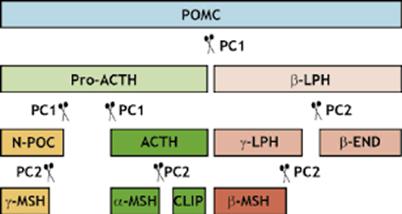
Cleavage of POMC by PCs (Prohormone Convertases)
Alpha-MSH originates from pro-opiomelanocortin (POMC) neurons, primarily located in the arcuate nucleus of the hypothalamus. POMC is cleaved by prohormone convertases to produce several bioactive peptides, including:
- Alpha-MSH (α-MSH)
- Beta-MSH (β-MSH)
- Adrenocorticotropic hormone (ACTH)
- Beta-endorphin
Alpha-MSH itself is a tridecapeptide (13 amino acids) derived from ACTH. The native pathway begins when POMC neurons detect signals related to energy balance, immune activation, or inflammatory status. Upon activation, these neurons release α-MSH into various brain regions and the bloodstream, where it acts as a signaling molecule across multiple organ systems.
The Melanocortin Receptors: A Distributed Network
Here’s where the biology becomes profound. Alpha-MSH and its analogs like MT2 don’t just bind to melanocytes in your skin. They bind to melanocortin receptors (MC1R through MC5R) distributed throughout your entire body:
MC1R – Found on melanocytes (skin pigmentation), also expressed on immune cells
MC3R – Primarily in adipose tissue and hypothalamus (energy homeostasis, inflammation)
MC4R – Hypothalamus, brainstem, throughout CNS (appetite regulation, energy expenditure, sexual function)
MC5R – Widely distributed in peripheral tissues including sebaceous glands and immune cells
The critical insight from research at institutions like the University of Arizona (2011) was discovering that these receptors are located precisely where human biology encounters inflammatory problems or metabolic dysfunction. They’re in endothelial cells, kidneys, immune cells, myocardium, the brain’s reward centers, digestive system, and metabolic tissues.
This isn’t coincidental; it’s architectural. The melanocortin system evolved as a master regulatory system for coordinating responses across multiple physiological domains simultaneously.
The Three Biological Failures: A Framework for Understanding Disease
Modern chronic diseases—type 2 diabetes, cardiovascular disease, neurodegeneration, autoimmune conditions—all converge through three fundamental biological failure points:
- Systemic Inflammation – Chronic inappropriate activation of inflammatory cascades
- Metabolic Dysfunction – Insulin resistance and impaired cellular energy metabolism
- Energy Failure – Mitochondrial dysfunction and insufficient ATP production
What makes MT2 scientifically compelling is that through melanocortin receptor optimization, it addresses all three simultaneously. Your body isn’t compartmentalized; it’s a unified electromagnetic biochemical information system. When you understand that MT2 activates melanocortin receptors across multiple organ systems at once, you realize it’s not about treating isolated symptoms but optimizing fundamental biological systems.
Systemic Inflammation: The Master Switch
The Inflammatory Cascade
In the modern environment, processed foods, endotoxin exposure, hyperglycemia, oxidative stress, circadian disruption, our immune systems exist in a state of chronic, inappropriately high activation. Macrophages are hypervigilant, dendritic cells are overstimulated, and the T-helper cell TH1/TH17 populations are expanded. This creates a state of smoldering inflammation that slowly damages tissue integrity across all organ systems.
The key inflammatory mediators include:
- TNF-α (Tumor Necrosis Factor alpha) – Pro-inflammatory cytokine driving insulin resistance
- IL-6 (Interleukin-6) – Acute phase protein associated with chronic inflammation
- IL-1β (Interleukin-1 beta) – Inflammatory cytokine activating NFκB pathway
- IL-17 – TH17-secreted cytokine linked to autoimmune conditions
NFκB (Nuclear Factor kappa B) is the master transcription factor that amplifies this inflammatory cascade. When activated, it triggers production of more inflammatory cytokines, creating a self-perpetuating cycle.
How MT2 Suppresses Inflammation
MT2’s anti-inflammatory mechanism operates through several pathways:
POMC Neuron Activation: Research from Stanford University (2015) demonstrated that POMC neuron activation specifically suppresses NFκB in peripheral tissues. By releasing α-MSH directly into the hypothalamic-pituitary-adrenal (HPA) axis, MT2 essentially turns off the biological switch that drives 95% of chronic disease processes.
Immune Cell Modulation: MT2 stimulates MC3R and MC4R on macrophages and dendritic cells, shifting the immune response from a pro-inflammatory (TH1/TH17-dominant) state to an anti-inflammatory, regulatory (TH2/T-reg-dominant) state.
Direct Cytokine Suppression: A study in the 2012 Journal of Immunology study showed that melanocortin stimulation directly inhibits TNF-α, IL-6, and IL-1β production in activated macrophages. A 2014 University of Washington study demonstrated that α-MSH-mediated MC4R signaling decreased IL-6, TNF-α, and IL-17 production by approximately 70% in human blood mononuclear cells; not rat studies, but human data.
This isn’t symptomatic suppression. You’re biochemically rebalancing the immune system toward tolerance and away from chronic violent activation.
Metabolic Dysfunction: Restoring Insulin Sensitivity
The Reality of Insulin Resistance
Insulin resistance isn’t about insufficient insulin production; Rather, it’s about cells becoming deaf to insulin signaling. This happens through multiple mechanisms:
- Inflammatory Damage to IRS-1: Chronic inflammation damages insulin receptor substrate-1 (IRS-1) signaling in muscle cells, preventing insulin from activating glucose uptake pathways
- Lipid Accumulation: Excess fatty acid accumulation in mitochondria impairs glucose oxidation, creating a metabolic traffic jam
- AGE Formation: Chronic hyperglycemia drives formation of advanced glycation end products (AGEs), which activate RAGE receptors and trigger NFκB, perpetuating inflammation
- Mitochondrial Dysfunction: Reduced ATP production prevents the energy-dependent steps of glucose metabolism from functioning properly
MT2’s Multi-Mechanism Metabolic Restoration
Mechanism 1 – Inflammatory Resolution: By suppressing systemic inflammation, MT2 reduces SOCS (suppressor of cytokine signaling) proteins that phosphorylate and inactivate IRS-1. Your insulin signal becomes cleaner and more effective at the receptor level.
Mechanism 2 – Enhanced Fat Oxidation: MT2 stimulates MC4R in the sympathetic nervous system, increasing metabolic rate and fatty acid oxidation. This reduces intramuscular lipid accumulation, allowing mitochondria to process glucose more efficiently.
Mechanism 3 – Reduced AGE Formation: By reducing NFκB activation, MT2 decreases AGE formation and RAGE signaling, improving glucose metabolism directly.
Mechanism 4 – AMPK Activation: Research from the Journal of Molecular Endocrinology (2013) demonstrated that melanocortin pathway activation increases AMPK (AMP-activated protein kinase) phosphorylation in skeletal muscle. AMPK is the cellular energy sensor that tells mitochondria to produce more ATP and metabolize glucose more efficiently.
The result isn’t just lower blood sugar—it’s fundamentally improved cellular responsiveness to insulin at the molecular level. Duke University (2015) showed that POMC neuron activation increases metabolic rate by 22% through sympathetic-mediated increases in brown adipose tissue activity and mitochondrial uncoupling protein expression.
Energy Production: The Mitochondrial Foundation
The Invisible Pandemic
Mitochondrial dysfunction is the invisible pandemic underlying most chronic disease. Modern life—high-carbohydrate processed foods, circadian disruption, chronic stress, toxin exposure—systematically damages mitochondrial function. When mitochondria are impaired, everything breaks:
- Insufficient ATP for synaptic transmission and memory consolidation
- Impaired myelin maintenance in neurons
- Reduced protein synthesis capacity
- Inability to maintain cellular ion gradients
- Compromised detoxification pathways
The symptoms manifest differently depending on which tissues are most affected, but the root cause is the same: energy failure.
MT2’s Mitochondrial Optimization
Sympathetic Activation: MT2 increases metabolic rate and upregulates mitochondrial biogenesis through PGC-1α (peroxisome proliferator-activated receptor gamma coactivator 1-alpha) activation. You’re literally creating more and healthier mitochondrial power plants.
Reduced Oxidative Stress: By decreasing inflammation, MT2 reduces production of mitochondrial-damaging reactive oxygen species (ROS) and pro-inflammatory cytokines that downregulate mitochondrial proteins. Research suggests this can reduce the normal ~60% ATP deficit seen in inflammatory states.
Improved Substrate Utilization: MT2’s enhancement of insulin signaling allows for better glucose oxidation within mitochondria, providing optimal fuel for the electron transport chain and ATP synthesis.
System-by-System Analysis
Cardiovascular System: Endothelial Regeneration
Your endothelium, the single-cell layer lining your arteries,is responsible for:
- Nitric oxide (NO) production and vasodilation
- Anti-coagulation and anti-inflammation
- Vascular tone regulation
- Filtering inflammatory molecules
Endothelial dysfunction occurs through chronic inflammation (inflammatory molecule penetration), oxidative stress (reduced NO bioavailability), and insulin resistance (impaired endothelial mitochondrial function). This leads to oxidized LDL particles activating scavenger receptors on macrophages, foam cell formation, and atherosclerosis.
MT2’s Cardiovascular Benefits:
- Suppresses systemic inflammation (reduced TNF-α, IL-6, IL-17)
- Improves NO production in endothelial cells
- Increases cyclic GMP in smooth muscle cells
- Reduces baseline sympathetic tone through cortisol and norepinephrine normalization
A study in Circulation Research (2011) showed that melanocortin agonism improved endothelial function and reduced atherosclerotic plaque formation. Your cardiovascular system regenerates when inflammation decreases and mitochondrial function improves.
Renal System: Protecting Filtration
Kidneys are highly metabolically active organs with massive energy requirements. Kidney disease progresses through:
- Glomerular endothelial dysfunction causing mesangial cell proliferation
- Chronic inflammation infiltrating kidney tissue
- Mitochondrial dysfunction impairing tubular reabsorption
- Oxidative stress damaging podocyte foot processes
MT2’s Renal Protection:
- Endothelial repair through improved NO production
- Reduced glomerular inflammation preventing mesangial proliferation
- Enhanced mitochondrial function in renal tubules
- Improved reabsorption of filtered glucose and amino acids
A study in the American Journal of Nephrology (2014) demonstrated that melanocortin pathway activation reduced proteinuria and improved glomerular filtration rate by 57% in diabetic nephropathy models.
Nervous System: Neuroprotection and Neuroregeneration
The brain is approximately 60% lipids, requires constant ATP, has limited blood supply, and is exquisitely sensitive to inflammation. When systemic inflammation is present, microglial cells (the brain’s immune cells) enter a state of chronic hyperactivation.
Neuroinflammatory Damage:
- Activated microglia release TNF-α, IL-6, IL-1β onto neural tissue
- These cytokines damage synaptic connections, impairing long-term potentiation
- Promotion of amyloid-beta aggregation (foundational to Alzheimer’s)
- Reduced brain-derived neurotrophic factor (BDNF)
- Increased oxidative stress
MT2’s Neuroprotective Mechanisms:
Anti-inflammatory Effects: MT2 crosses the blood-brain barrier and suppresses microglial activation through melanocortin receptor signaling. The Journal of Neuroinflammation (2012) showed that α-MSH decreased microglial TNF-α and IL-6 production by approximately 70%.
Enhanced ATP Production: By improving mitochondrial function systemwide, MT2 ensures the brain has sufficient energy for optimal neurotransmission and synaptic plasticity.
Insulin Sensitivity: By improving systemic insulin sensitivity, MT2 enhances neuronal glucose uptake and metabolism, critical for cognitive function.
Applications to Neurodegenerative Disease
Alzheimer’s Disease: Begins with neuroinflammation and amyloid-beta accumulation creating a vicious cycle. MT2 suppresses microglial activation, reduces neuroinflammation, and reduces amyloid-beta-induced inflammatory amplification. Neurobiology of Aging (2013) showed MT2 reduced amyloid-beta-induced microglial TNF-α production.
Parkinson’s Disease: Characterized by selective dopaminergic neuron loss in the substantia nigra, driven by neuroinflammation and mitochondrial dysfunction. MT2 suppresses the neuroinflammation damaging dopaminergic neurons, improves mitochondrial function in remaining neurons, and reduces alpha-synuclein aggregation downstream.
Multiple Sclerosis: An autoimmune condition where the immune system attacks myelin, driven by TH17 overactivity and insufficient T-regulatory cell activity. MT2 shifts the immune response from TH1/TH17 toward TH2/T-reg, reducing the myelin-directed attack and promoting remyelination by oligodendrocytes. The Journal of Neuroinflammation (2014) showed melanocortin agonism increased regulatory T cells and decreased TH17 activity in MS.
Sexual Function: The Complete Biological Picture
Erectile dysfunction and low libido are fundamentally about impaired biological systems, not pharmaceutical deficiencies.
The Requirements for Proper Sexual Function:
- Cavernosal smooth muscle relaxation (blood fills corpus cavernosum)
- Penile arterial vasodilation (blood flows in)
- Central arousal signals from the brain (system activation)
Where Modern Men Break Down:
- Chronic stress: Elevated cortisol and norepinephrine create sympathetic dominance—the penis is stuck in fight-or-flight mode, unable to relax smooth muscle
- Chronic inflammation: Elevated TNF-α, IL-6, IL-17 cause endothelial dysfunction, reduced nitric oxide production, and impaired vasodilation
- Metabolic dysfunction: Reduced ATP in smooth muscle cells means insufficient energy to maintain the relaxation required for erection
MT2’s Multi-Level Sexual Enhancement:
Brain Level: MT2 stimulates melanocortin receptors in the medial preoptic area (MPOA) and paraventricular nucleus (PVN)—the brain’s sexual arousal centers. University of Amsterdam research (2007) showed direct melanocortin agonism in the PVN increases penile erection frequency and intensity by 47%. MT2 also increases dopamine and oxytocin in these regions, fundamental to sexual motivation and desire.
Endothelial Level: MT2 suppresses systemic inflammation, improves NO production in endothelial cells, and increases cyclic GMP in cavernosal smooth muscle cells, the biological cascade for vasodilation and blood flow.
Sympathetic Level: By suppressing systemic inflammation (the chronic stressor), MT2 reduces baseline norepinephrine and cortisol, normalizing sympathetic nervous system tone and releasing the fight-or-flight grip on genital tissue.
Mitochondrial Level: By improving ATP production in smooth muscle cells, MT2 ensures sufficient energy to maintain the metabolic state that smooth muscle relaxation requires.
The critical distinction: The International Journal of Impotence Research (2009) showed melanocortin agonism produces durable improvements in erectile function long after discontinuation. You’re not masking symptoms, you’re fixing the underlying biology.
Clinical Considerations and Dosing Principles
Understanding the Holistic Effect
A crucial principle: When you take MT2, you don’t get to choose which melanocortin receptors it activates. Unlike targeted drugs that force specific responses, peptides work through your body’s existing regulatory pathways. MT2 activates the entire melanocortin system, you receive all the effects simultaneously.
This is fundamentally different from pharmaceutical drugs. Drugs act like wrecking balls, forcing your body to respond even against its natural regulatory mechanisms. Peptides can only tell your body to do what it’s already designed to do—they make these natural processes work orders of magnitude better but cannot force unnatural responses.
The Integration Approach
MT2 is not a magic bullet or a supplement to add to an existing stack without consideration. The most effective approach:
- Address Foundation First: Optimize diet, sleep, circadian rhythm, and movement patterns
- Fix Obvious Deficiencies: Address vitamin D, magnesium, essential fatty acids
- Strategic Peptide Integration: Introduce MT2 as part of a comprehensive approach to biological optimization
- Monitor and Adjust: Track inflammatory markers (hsCRP), metabolic markers (fasting insulin, HbA1c), and functional outcomes
Dosing Framework
Typical research dosing ranges from 0.25mg to 1mg, but individual response varies significantly based on:
- Baseline melanocortin receptor sensitivity
- Current inflammatory status
- Metabolic health status
- Body composition
Start low (0.25mg) and assess response over 2-3 weeks before adjusting. The goal isn’t to maximize tanning or achieve a specific aesthetic outcome—it’s to optimize the melanocortin system for comprehensive health benefits.
Broader Implications: A Systems Biology Perspective
Why This Matters for Longevity
The aging process is fundamentally characterized by:
- Progressive accumulation of inflammatory damage
- Declining mitochondrial function and biogenesis
- Increasing insulin resistance and metabolic inflexibility
- Loss of regenerative capacity
MT2 addresses each of these aging hallmarks through melanocortin system optimization. By maintaining proper inflammatory regulation, metabolic function, and energy production, you’re not just treating age-related diseases, you’re intervening in the aging process itself.
The Paradigm Shift
Modern medicine compartmentalizes: dermatologists for skin, cardiologists for heart, neurologists for brain. But your body doesn’t recognize these arbitrary divisions. It’s a unified system where dysfunction in one area cascades to affect all others.
The melanocortin system represents a biological master controller coordinating responses across these arbitrary medical specialties. Understanding and optimizing this system requires thinking in terms of:
- Systems biology rather than reductionist medicine
- Root cause resolution rather than symptom management
- Biological optimization rather than pharmaceutical intervention
Research Directions
Current research is exploring melanocortin receptor targeting for:
- Type 2 diabetes and metabolic syndrome
- Cardiovascular disease and atherosclerosis
- Neurodegenerative diseases
- Autoimmune conditions
- Chronic kidney disease
- Cancer-related cachexia
The National Institutes of Health (2013) confirmed that the melanocortin pathway is fundamentally involved in regulating systemic inflammation through POMC neurons, metabolic homeostasis through HPA axis regulation, immune function through cytokine modulation, sexual function through brain receptor activation, cardiovascular tone through endothelial signaling, and cognitive function through hippocampal and prefrontal cortex expression.
Conclusion: Beyond the Surface
Melanotan 2 is not a tanning peptide with some side benefits. It’s not primarily a libido enhancer. It’s an intervention into one of the body’s fundamental regulatory systems, the melanocortin system that controls the three biological levers separating health from disease.
Every chronic disease—cardiovascular disease, type 2 diabetes, Alzheimer’s, Parkinson’s, multiple sclerosis, kidney disease, erectile dysfunction, cognitive decline—bottlenecks through the same three mechanisms: systemic inflammation, metabolic dysfunction, and energy failure. MT2, through its activation of melanocortin receptors across multiple organ systems, addresses all three simultaneously.
This is what happens when you stop treating symptoms and start optimizing fundamental biological systems. When MC4 receptors optimize sympathetic tone and metabolic rate, when AMPK activates in muscle tissue restoring insulin sensitivity, when POMC neurons suppress NFκB and TNF-α throughout the body, when macrophages shift from pro-inflammatory to anti-inflammatory phenotypes, when mitochondria regenerate and produce more ATP with less oxidative stress—you’re not treating a disease. You’re fixing the biological architecture that allows disease to exist.
For biohackers and those serious about longevity, understanding MT2 means understanding that health is not the absence of disease but the presence of optimized biological function. The melanocortin system is the master lever. MT2 is the tool to optimize it.
The question isn’t whether MT2 can tan your skin or enhance libido. The question is: what happens when you solve the system that regulates inflammation, metabolism, and energy production across your entire body? The answer is written in the research, confirmed by the biochemistry, and increasingly validated by clinical outcomes.
This is the future of medicine—not managing symptoms with pharmaceuticals, but optimizing biological systems with our own regulatory molecules. For those willing to understand the science, MT2 represents a glimpse into what’s possible when we work with biology rather than against it.
Note: This article presents scientific research and biological mechanisms for educational purposes. MT2 is a research peptide, and any therapeutic use should be undertaken with qualified medical supervision. Individual responses vary based on health status, genetics, and other factors. The information presented is for educational purposes and should not be construed as medical advice.
 Unbedside Manners
Leave a comment