Dr. Cornelius Packard Rhoads remains one of the most controversial figures in American medical history—a man whose groundbreaking contributions to cancer research are forever tainted by expressions of virulent racism that, rather than ending his career, were systematically minimized and forgotten as he ascended to the pinnacle of medical prestige.
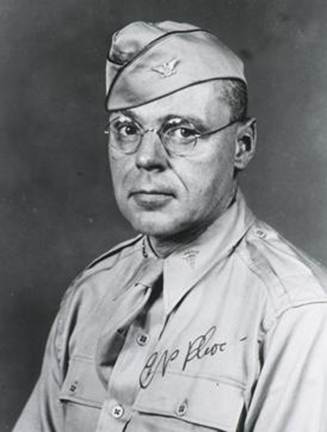
Born in 1898 in Massachusetts, Rhoads pursued medicine with apparent dedication, earning his medical degree from Harvard in 1924. His early career showed promise, and by 1931, he had secured a position with the Rockefeller Institute conducting research in Puerto Rico, studying anemia and tropical diseases. It was during this posting that Rhoads would pen words that should have ended his professional life.
In 1931, Rhoads wrote a letter containing shocking racist statements about Puerto Ricans, expressing a desire to harm his patients and claiming to have already done so. The “harm” included injecting innocent patients with cancer cells, just because they were Puerto Ricans and he did not like them. The letter included statements describing Puerto Ricans as the “dirtiest, laziest, most degenerate and thievish race of men ever inhabiting this sphere” and discussed killing patients. When this letter surfaced publicly, it ignited outrage within Puerto Rico and among civil rights advocates who demanded accountability.
What followed was not justice, but whitewashing. An investigation was conducted, but rather than facing serious consequences, Rhoads received what amounted to professional absolution. The investigation concluded that his statements were merely an expression of frustration and that no patients had actually been harmed. The incident was quietly buried, dismissed as an unfortunate lapse in judgment rather than evidence of dangerous racial animus from a physician with power over vulnerable patients.
The aftermath is perhaps even more disturbing than the original offense. Instead of derailing his career, the scandal barely slowed Rhoads down. During World War II, he became involved in chemical warfare research, investigating the medical applications of mustard gas—work that would prove foundational to chemotherapy development. After the war, his career trajectory continued upward at an astonishing pace.
In 1948, Rhoads was appointed director of Memorial Hospital (later Memorial Sloan Kettering Cancer Center) in New York, one of the world’s premier cancer treatment and research institutions. Under his leadership, the hospital expanded significantly, and Rhoads became a central figure in cancer research. His work on chemotherapy earned him widespread recognition within the medical establishment. In 1949, he appeared on the cover of Time Magazine—the ultimate symbol of mainstream American success and respectability.
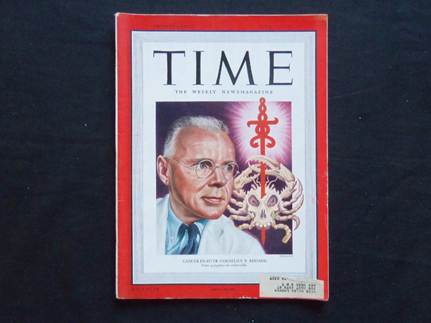
The message was clear: racism, even when directed at patients, even when expressed by a doctor toward those in his care, would not prevent a white physician from reaching the highest echelons of American medicine. Rhoads’s ascent sent a chilling message about whose humanity mattered and whose suffering could be overlooked in the pursuit of scientific advancement.
Today, Rhoads’s legacy remains deeply complicated. His contributions to chemotherapy research genuinely advanced cancer treatment and saved lives. Yet these achievements cannot be separated from the context of how he viewed certain patients or the institutional racism that protected him. The medical establishment that elevated him despite his documented racism must also answer for its complicity.
In recent decades, historians and medical ethicists have begun reexamining Rhoads’s legacy more critically. Some institutions have removed his name from awards and buildings, acknowledging that honoring someone with such a documented history of racism sends an unacceptable message about values and priorities in medicine.
The story of Cornelius Rhoads serves as a stark reminder that scientific progress and moral failure can coexist in the same person, and that a society’s willingness to overlook the latter for the sake of the former reveals everything about whose lives it truly values. His career stands as a testament to how thoroughly racism was embedded in American medicine—and how far we still have to go in reckoning with that history.
 Unbedside Manners
Leave a comment