In August 1959, a young Marion Gerald Hood received a letter that would have crushed many people’s dreams. The message from Emory University School of Medicine was swift, blunt, and devastating: “I am sorry I must write you that we are not authorized to consider for admission a member of the Negro race.” Along with the rejection came his returned five-dollar application fee—a final, dismissive punctuation mark on his aspirations.
Hood never expected that letter to become a symbol of an era, nor that 62 years later, it would hang framed in his basement as a powerful reminder of how far America has come and how far it still needs to go.
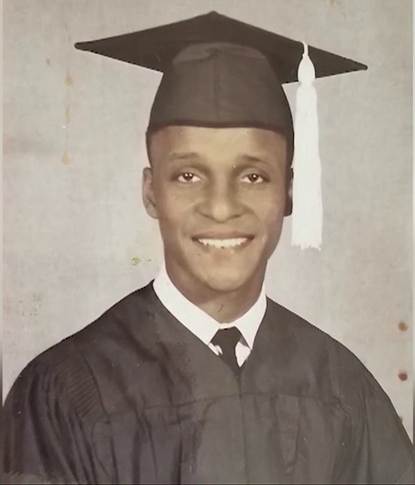
The Seeds of a Dream
Growing up in Griffin, Georgia, Hood’s path to medicine began not in a classroom but in a cramped examination room where injustice wore a white coat. He accompanied his mother, Jessie Lee Hood Trice, a practical nurse who raised him and his two siblings, to a doctor’s appointment. They entered through the back door, relegated to a tiny room resembling a closet. His mother sat on a Coca-Cola crate while they waited for every white patient to be seen first.
That moment crystallized young Marion’s future. He would become a physician, and he would treat all patients with the dignity his mother had been denied.
By 1959, Hood had graduated from Clark College and was pursuing his dreams with determination. When he applied to Emory’s medical school that July, he had already submitted applications to Howard University and Meharry School of Medicine. The response from Emory’s Director of Admissions, L.L. Clegg, arrived in less than a week, four sentences that epitomized the institutional racism of Jim Crow America.
A System Designed to Exclude
The letter Hood received wasn’t an anomaly. It was policy. In the segregated South of 1959, universities operated under state laws that penalized racial integration. Ironically, Georgia would pay Black students the difference in tuition costs to attend schools out of state—ensuring they received their education anywhere but in Georgia’s white institutions.
“I did not expect to get into Emory,” Hood later reflected with remarkable grace.
Rising Above Rejection
Hood took his “last shot” at medical school and applied to Loyola University Chicago’s Stritch School of Medicine. They accepted him. During his years at Loyola, Hood discovered that discrimination followed him even into medical school. “The professor in OB-GYN asked me questions,” he recalled. “So I had to be extra prepared.”
He graduated in 1966, completed his internship in Orange County, California, and returned to Chicago for his obstetrics and gynecology residency. After serving as a doctor in Vietnam, Hood came back to Atlanta, the city where he’d been rejected, and opened his own practice in 1974.
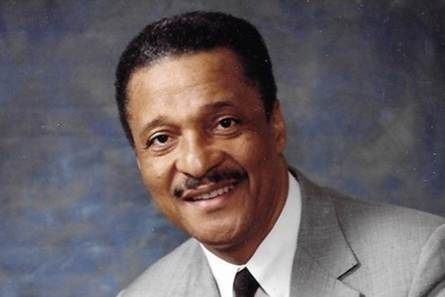
Over the next 34 years, Dr. Hood delivered more than 7,000 babies and built a reputation as a compassionate, skilled physician. But perhaps the most powerful testament to his character came from a story he shared through tears decades later. Working in an emergency room early in his career, a patient spit in Hood’s face upon waking and seeing his Black doctor. When the man later expressed confusion about why Hood continued providing excellent care, Hood’s response embodied his life philosophy: “I was a doctor. I wanted to take care of people and sometimes you have to take care of people that you don’t really like.”
A Belated Apology
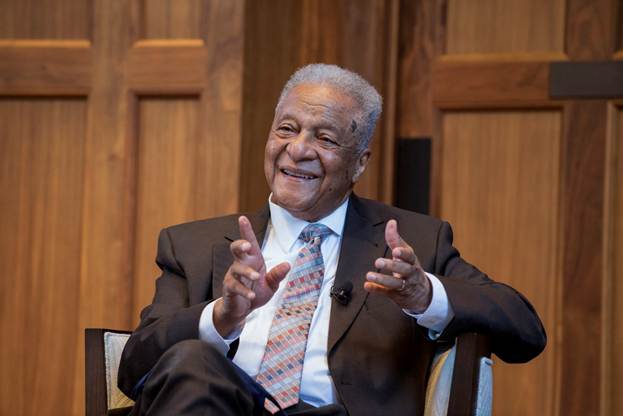
Emory desegregated in 1962 and admitted its first Black medical student in 1963 just four years after rejecting Hood. But it took until June 2021 for the institution to formally apologize.
At age 83, Hood participated in a Juneteenth event at Emory where Dean Vikas P. Sukhatme delivered a formal apology on behalf of the medical school, acknowledging that Hood’s distinguished career showed he had been “the ideal candidate.”
After retiring in 2008, Hood didn’t stop serving. He continues working part-time at a clinic in Warm Springs, Georgia, that treats patients regardless of their ability to pay.
His rejection letter remains framed in his basement, not hidden in shame, but displayed where friends can see it. It’s his reminder of “how far we’ve come, and how far we have to go.”
Dr. Marion Gerald Hood’s story isn’t just about perseverance in the face of discrimination. It’s about a man who refused to let hatred define his purpose and demonstrated that the measure of a physician isn’t found in the prestige of their medical school but in the content of their character and the lives they touch.
 Unbedside Manners
Leave a comment