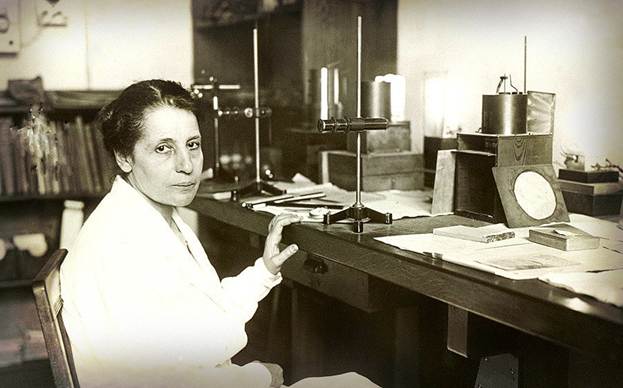
In the annals of scientific discovery, few breakthroughs have been as transformative, or as terrifying, as the splitting of the atom. This monumental achievement, which unlocked the secrets of nuclear energy and weaponry, stands as one of the defining moments of the 20th century. Yet, the name most widely associated with the theoretical explanation of this phenomenon, Lise Meitner, was conspicuously absent from the Nobel Prize podium, a glaring omission that stands as a stark example of scientific injustice compounded by gender and ethnic prejudice.
Born in Vienna, Austria-Hungary, in 1878, Lise Meitner displayed an early aptitude for mathematics and physics. Despite societal barriers that limited educational opportunities for women, her family supported her intellectual pursuits. She pursued higher education, eventually earning a doctorate in physics from the University of Vienna in 1906, becoming only the second woman to do so. Her early work focused on radioactivity, a field that was still in its infancy.
In 1907, Meitner moved to Berlin, a vibrant hub of scientific research, hoping to work with the renowned chemist Otto Hahn. Their collaboration began under restrictive circumstances due to Meitner’s gender; she was initially not allowed to work in the main laboratories and had to conduct her research in a repurposed carpentry workshop in the basement. Despite these demeaning conditions, their partnership flourished. For over three decades, Meitner and Hahn formed a highly productive team, studying radioactivity and nuclear physics. Meitner, a brilliant physicist, often provided the theoretical framework and conceptual insights, while Hahn, a skilled experimental chemist, performed many of the chemical separations.
In 1912, Hahn and Meitner moved to the newly founded Kaiser Wilhelm Institute (KWI) for Chemistry in Berlin. Hahn accepted an offer to become a junior assistant in charge of its radiochemistry section, which was the first lab of its kind in Germany. The job came with the title of “professor” and a salary of 5,000 marks per year (equivalent to €29,000 in 2021). Unlike the universities, the privately funded KWI had no policies excluding women, but Meitner worked without pay as a “guest” in Hahn’s section.
Meitner later earned a salary, although dwarf-size in comparison to her partner and collaborator. Hahn and Meitner’s salaries would soon be dwarfed by royalties from Mesothorium (“middle thorium”, radium-228, also called “German radium”). This new radioactive element they discovered and characterized had important clinical applications. Hahn received 66,000 marks in 1914 (equivalent to €369,000 in 2021). He gave ten per cent to Meitner. A few years later, Meitner wanted to leave to return closer to her home. The Institute recognized her value, and Fischer arranged for her salary to be doubled. But 3,000 marks (equivalent to €17,000 in 2021) was still infinitesimal compared to the salaries of the men. She stayed.
Their most significant work began in the late 1930s, as they investigated the products formed when uranium was bombarded with neutrons. Scientists around the world, including Enrico Fermi, were attempting to create new, heavier elements (transuranic elements) by this method. Meitner and Hahn, along with their assistant Fritz Strassmann, were also pursuing this line of inquiry.
However, the political climate in Germany rapidly deteriorated. Meitner, who was of Jewish descent, became increasingly imperiled by the Nazi regime’s persecution. In July 1938, she was forced to flee Germany with few possessions, escaping to Sweden with the help of colleagues. Her abrupt departure meant she could no longer directly participate in the experiments, but her intellectual collaboration with Hahn continued through letters and clandestine meetings.
It was through this correspondence that Hahn communicated to Meitner his puzzling experimental results: when uranium was bombarded with neutrons, it appeared to produce lighter elements, specifically barium. Hahn, a chemist, was baffled. He wrote to Meitner: “Perhaps you, Lise, can suggest some fantastic explanation.”
Meitner, collaborating with her nephew, physicist Otto Frisch, who was also a refugee in Sweden, meticulously analyzed Hahn’s data. During a winter walk in the snow, a brilliant idea struck them. They realized that the uranium nucleus, instead of merely being modified, had actually split into two smaller nuclei, releasing an enormous amount of energy in the process. Frisch coined the term “fission” for this new nuclear process, borrowing it from biology.
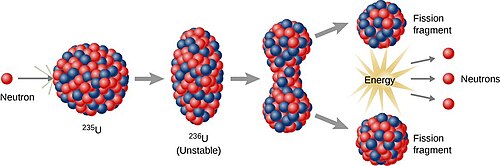
Their paper, “Disintegration of Uranium by Neutrons: A New Type of Nuclear Reaction,” published in Nature in January 1939, provided the first theoretical explanation of nuclear fission, applying Einstein’s famous equation E=mc2 to calculate the immense energy released. This groundbreaking insight not only explained Hahn’s baffling results but also opened the door to the atomic age.
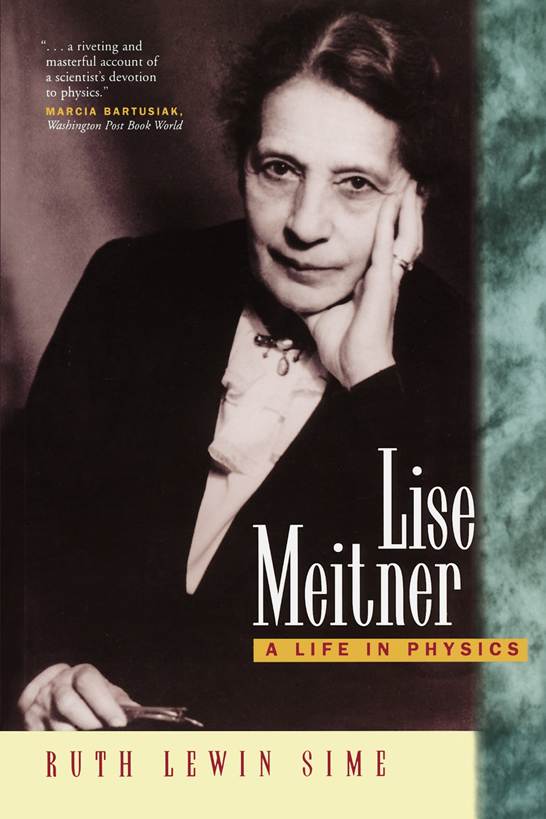
The scientific world was electrified. However, when the Nobel Prize in Chemistry was awarded in 1944 “for his discovery of the fission of heavy nuclei” it went solely to Otto Hahn. Meitner was completely overlooked. This exclusion was not merely an oversight; it was a deliberate act influenced by a combination of factors. Hahn, under pressure from the Nazi regime, had begun to downplay Meitner’s intellectual contributions after she fled Germany, to avoid associating his “German” discovery with a Jewish scientist. The Nobel Committee, possibly influenced by these political pressures and certainly by the prevailing sexism in science, failed to recognize her indispensable role.
Despite the profound injustice, Meitner continued her research in Sweden, declining invitations to work on the Manhattan Project because she did not want to be involved in the creation of a weapon. She remained a fierce advocate for the peaceful use of atomic energy.
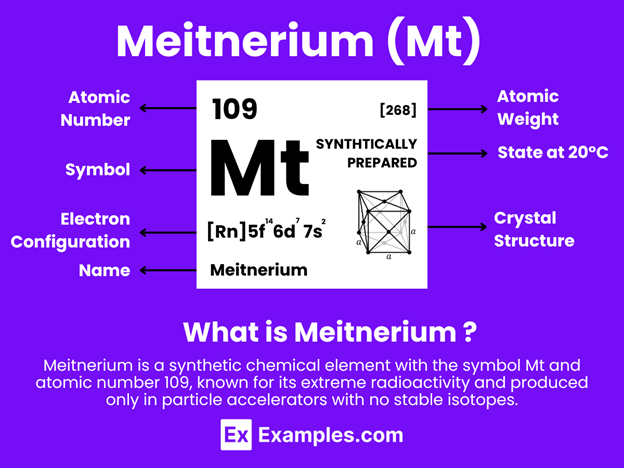
Lise Meitner received numerous other accolades throughout her life, including the Enrico Fermi Award in the U.S. (shared with Hahn and Strassmann), and has a chemical element, Meitnerium (Mt), named in her honor. Yet, the absence of the Nobel Prize for her foundational work on nuclear fission remains one of the most glaring errors in the Nobel Committee’s history. Her story is a powerful testament to the brilliance that can emerge even from the most oppressive conditions, and a stark reminder of the battles against sexism and prejudice that women scientists have historically faced, often robbing them of their rightful place in the pantheon of scientific giants.
 Unbedside Manners
Leave a comment