The Antioxidant and Anti-Inflammatory Cascade
Aging is fundamentally a process of accumulating oxidative damage and chronic inflammation—a state often called “inflammaging.” Chronic low-grade inflammation breaks down tissue, impairs regeneration, and accelerates aging across all organ systems. GHK-Cu addresses both oxidative stress and inflammation through multiple mechanisms.
By delivering copper to Superoxide Dismutase enzymes, GHK-Cu enhances the neutralization of superoxide radicals—highly reactive oxygen species that damage proteins, lipids, and DNA. SOD catalyzes the conversion of superoxide into hydrogen peroxide and oxygen. While hydrogen peroxide can itself be damaging, it’s much less reactive than superoxide and is subsequently broken down by catalase and glutathione peroxidase. The result is a cascading antioxidant effect.
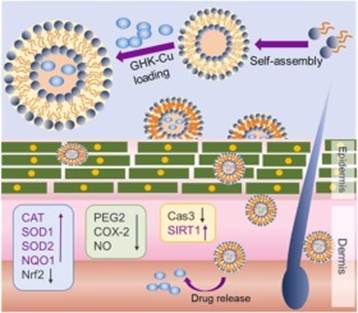
GHK-Cu dramatically reduces lipid peroxidation, the oxidative damage to cell membrane lipids that creates toxic breakdown products like malondialdehyde and 4-hydroxynonenal. These aldehydes are highly reactive and can form adducts with proteins and DNA, propagating damage. Studies have shown that GHK-Cu can reduce lipid peroxidation markers by up to fifty-two percent, essentially halving the rate at which cell membranes are being destroyed by oxidative stress.
The peptide also reduces protein carbonylation, a form of oxidative damage where carbonyl groups are added to protein side chains. Carbonylated proteins lose their function and often aggregate, contributing to cellular dysfunction. This is particularly relevant in aging, where protein quality control systems become less efficient and carbonylated proteins accumulate.
On the anti-inflammatory front, GHK-Cu suppresses the production of pro-inflammatory cytokines through several mechanisms. It inhibits Nuclear Factor kappa B, a master transcription factor that turns on inflammatory genes. NF-κB is normally sequestered in the cytoplasm, bound to inhibitory proteins. When inflammatory signals arrive—from pathogens, damage, or stress—NF-κB is released and translocates to the nucleus, where it activates genes encoding IL-1β, IL-6, TNF-α, and other inflammatory mediators. GHK-Cu interferes with this activation sequence, keeping NF-κB in its inactive state.
The peptide also modulates Transforming Growth Factor beta-1, a double-edged sword in tissue biology. TGF-β1 is necessary for wound healing and immune regulation, but when chronically elevated or dysregulated, it drives fibrosis—the excessive deposition of disorganized collagen that creates scar tissue. In liver cirrhosis, kidney fibrosis, and cardiac fibrosis, runaway TGF-β1 signaling is a central pathological mechanism. GHK-Cu appears to normalize TGF-β1 levels, promoting healing without excessive scarring.
GHK-Cu also reduces mast cell degranulation. Mast cells are immune cells that release histamine and other inflammatory mediators when activated. They play important roles in allergic responses and defense against pathogens, but chronic mast cell activation contributes to inflammatory skin conditions, irritable bowel syndrome, and other inflammatory disorders. By stabilizing mast cells, GHK-Cu lowers overall inflammatory tone.
Effects on Hair Growth: The Follicle Regeneration Mechanism
One of GHK-Cu’s most visible effects is its impact on hair growth, which operates through several distinct mechanisms that reveal its broader regenerative capabilities.
Hair follicles contain stem cells in a region called the “bulge,” located near the attachment point of the arrector pili muscle (the muscle that causes goosebumps). These stem cells are normally quiescent, sitting dormant until activated by specific signals. Hair growth occurs in cycles: anagen (growth phase lasting two to seven years), catagen (transitional phase lasting about two weeks), and telogen (resting phase lasting two to four months). In pattern baldness and age-related hair thinning, follicles spend progressively less time in anagen and more in telogen, with each cycle producing finer, shorter hairs until the follicle eventually miniaturizes completely.
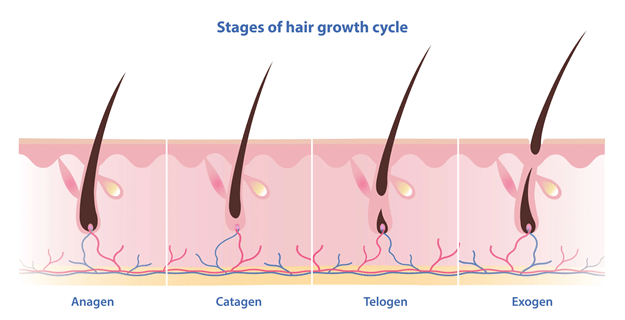
GHK-Cu activates follicle stem cells, pushing follicles from telogen into anagen. The mechanism involves upregulation of Wnt signaling pathways and modulation of various growth factors that govern the hair cycle. Studies have shown that GHK-Cu can enlarge hair follicles that have undergone miniaturization, essentially reversing part of the balding process.
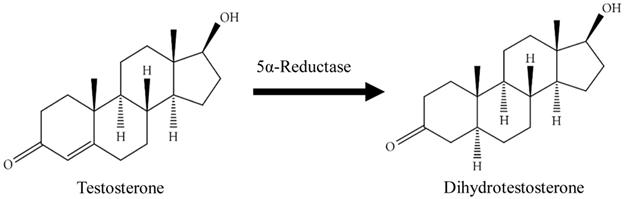
The peptide also inhibits 5α-Reductase, the enzyme that converts testosterone to dihydrotestosterone. DHT is a potent androgen that miniaturizes hair follicles in genetically susceptible individuals, causing male and female pattern baldness. By reducing local DHT production in the scalp, GHK-Cu reduces the hormone’s damaging effects on follicles. This is the same mechanism exploited by finasteride, but GHK-Cu’s effect is localized rather than systemic, potentially avoiding the side effects associated with system-wide DHT suppression.
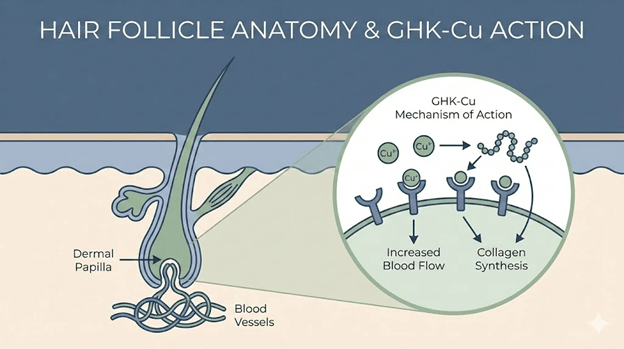
Like BPC-157, GHK-Cu promotes angiogenesis around hair follicles. Hair follicles are metabolically demanding structures—the matrix cells at the base of the follicle during anagen are among the most rapidly dividing cells in the body. This requires robust blood supply to deliver oxygen, glucose, amino acids, and other nutrients. Improved vascularization means better-nourished follicles capable of producing thicker, healthier hair shafts.
GHK-Cu also suppresses TGF-β2, a different isoform from TGF-β1 that promotes apoptosis in hair follicle cells. TGF-β2 is thought to be one of the signals that pushes follicles from anagen into catagen, initiating the hair shedding process. By reducing TGF-β2, GHK-Cu allows follicles to remain in growth phase longer, increasing the length and density of hair.
Continue with Part 4
 Unbedside Manners
Leave a comment